Category: South America

  • Inca Trail day 3: Cloud forests, precarious toilets and a tip ambush

    Inca Trail day 3: Cloud forests, precarious toilets and a tip ambush

    Eventually, we wandered into our second campsite. To find the porters had all been busy again, the tents had been built, the canteen tent was laid out ready for dinner and we had bowls of water sitting outside our tents for washing.

    Another smashing evening chatting with our companions, good food and it was time to re-engage with my wandering mattress in the tent for another night chasing it around the tent floor. After such a long period without camping the hard ground started to take its toll so the early morning stretch was getting tougher.

    Same routine with breakfast and then we set off on a long day of climbing. The downside of coming through the valley was that we were way below the altitude needed for the Sun Gate at Machu Picchu. If we had gone over Dead Woman’s Pass we would have been coming down so day 3 would have been the easy part of the journey.

    The Incas were very busy step builders and we were regularly negotiating steep climbs and drops using the stairs they had built 500 years ago. The path meandered along the hillsides, dropping occasionally but it was never any relief, because whenever we went down, we knew we would be coming back up.

    Best scenery of the trek

    The scenery on day 3 was stunning, mostly we climbed through the cloud forest, which is pretty much what it says on the tin, the altitude of the forest means that there are shrouds of clouds in amongst the trees, I guess we would normally call the fog!

    The comradery of our fellow adventurers was great but the strain of the climbing was making an impact on Todd’s knees and he really started to slow up, as did Wooksie who was struggling again as we started to hit altitude, plus the endless steps up through the terraces. The young people didn’t have any of these issues and I made it my business to try to keep up with them, but it wasn’t particularly successful.

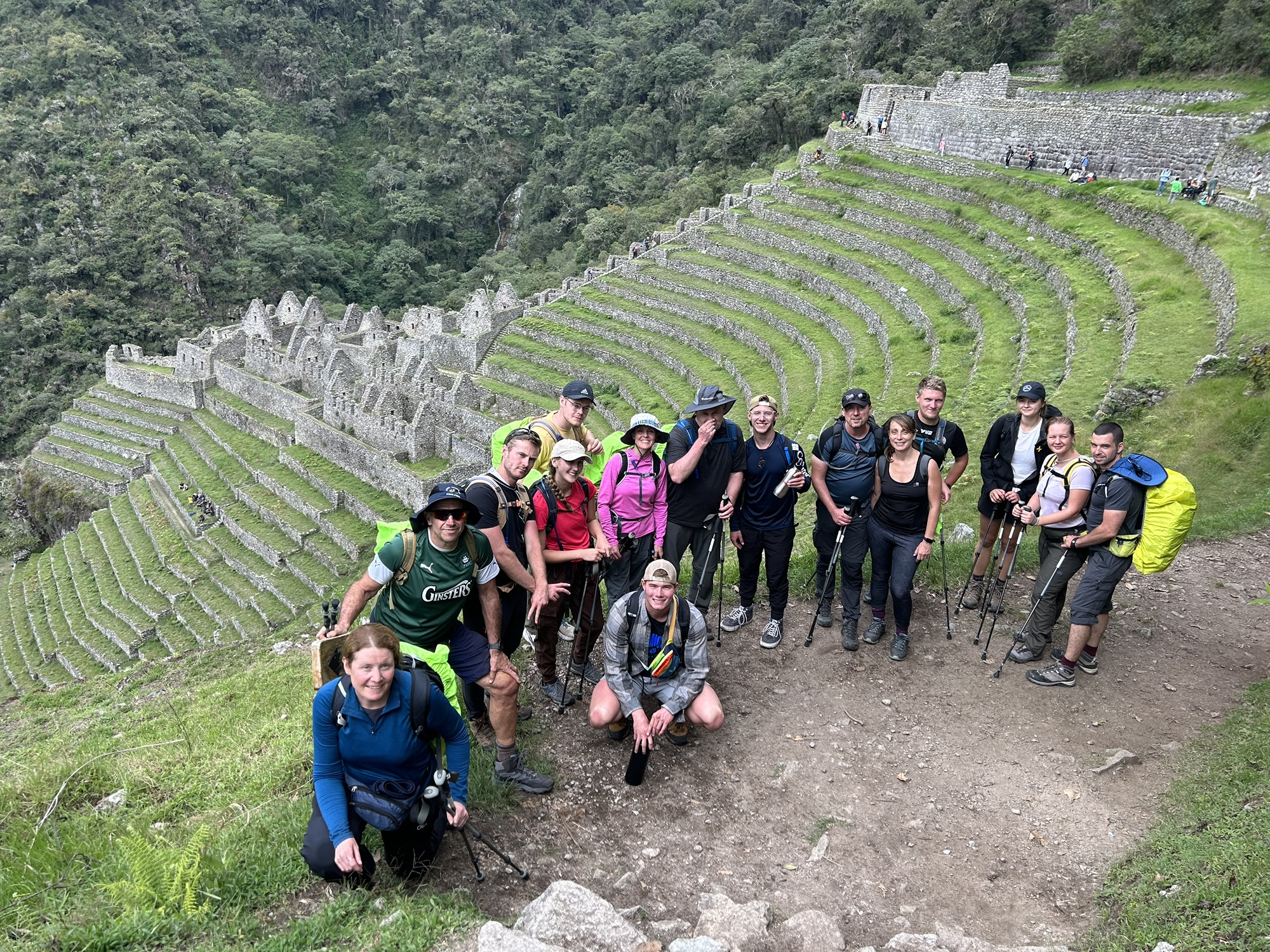
    There were some spectacular structures along the route which left us in awe of the Inca ability to turn uninhabitable hillsides into fertile terraces for growing crops of raising animals, probably Alpacas and Lamas.

    Into the afternoon we finally crossed the path coming down from Dead Woman’s Pass which marked the end of the serious climbing for that day. Soon afterwards we were at probably the most impressive of the remote Inca temples and settlements, stunning views, great photo opportunities and an end of the climbing.

    We headed up for the last push to the next campsite only to find that we had actually arrived and it was only 10 minutes away. The porters were busy assembling tents on the terraces and putting the food together for the evening.

    We had a big chunk of the afternoon to ourselves for recovery, which the young people used to climb up some of the trail to Dead Woman’s Pass to prove they had done it, meanwhile, Wooksies decided she would just go and have a lay down, whilst Todd and I went and found ourselves a nice bench and talked about to right the wrongs of the world, and the looking threat of a Trump presidency.

    Precarious Loos

    This was our last camp, and due to it’s location at the end of the trail it was very busy. The conditions were crammed and toilet facilities were at a premium. Each night the porters erected a toilet tent, and tonight was no exception, however, due to the precipitous location of the camp site, the toilet tent was literally hanging off the side of the cliff.

    Going to the loo involved a lot of dexterity, but we had to hang on to the branch of a tree to stop us tumbling down the hillside into the bushes. There weren’t many late night visits to the loo that was for sure, and it wasn’t linked to heavy rain that started to fall during dinner.

    The tipping tradition

    The tradition of treks normally involves a tip for the porters which is collected as a form of thank for their services. In this case it was more a form of extortion, after dinner, the trek leader gave us a grand stand speech on how poor everyone was, and how we were rich.

    The poor old cooks and porters were made to queue up in the rain, and then they were marched in front of us bowing while we applauded their efforts. It was clear that it was humiliating for them and embarrassing for us, in fact, I eventually suggested that they should be allowed to get in out of the rain as they had worked hard enough and didn’t need to be going through this ritual.

    He then told us that we should have separate tips for the cook team and the porter team, and that each trekker should contribute $50 to each of the team, which was $100 each in total. Todd had his family of 7 with in, so in effect he was looking at a tip of $700 !

    It is fair to say that this rather the dampened the atmosphere as nobody was carrying that sort of cash. Between us we clubbed together and created a decent contribution from the group.

    Interestingly, when we did our feedback to Alpaca Tours on the bus home, everyone complained (without any co-ordination) and to be fair we were met in Cusco by representative who worked hard to resolve the problem, but be warned.
  • Puno, Lake Titicaca and Altitude Sickness

    Puno, Lake Titicaca and Altitude Sickness

    Our altitude strategy was to prepare for the Inca Trail trek was to spend 4 days at high altitude on Lake Titicaca, at 3800m to adjust, and then travel down to Cusco at 2500m and we should have been ready to go.

    Unfortunately Wooksie had picked up a tummy bug on the way back from Nazca so wasn’t on top form. We flew from Lima to Juliaco, all the guidebooks said avoid Juliaco unless you want to be mugged, which we didn’t so we got a taxi direct to Puno.

    The lack of oxygen at high altitude hits you really fast, when I got out at Juliaco it was like having a weight on my chest. During the taxi ride Wooksie said she was feeling really sleepy, I felt drowsy as well as my body adjusted to the lack of oxygen. I was particularly concerned because I suffer from asthma, so expected a tricky transition.

    We booked a lovely hotel on the banks of Lake Titicaca, on the basis we could sit around, enjoy the view, not do much and adapt. We pottered around for a bit and Wooksie decided she wanted a nap, this was exactly what every guide to high altitude said would happen, so I wasn’t particularly concerned and went for a walk to push my lungs and push my transition.

    That night we had dinner in the hotel and an early night, next day we went for a walk around Puno, which I have to say isn’t a very exciting place.

    Unexciting unless you are in the fruit market when the train comes through, at that point all the stalls are dragged off the tracks until it has gone.

    We strolled around the port, bought some medicine for the stomach bug, but Wooksie was tired again and went back to bed in the afternoon, while I got in a 10km walk without much trouble so I was doing fine.

    We then did a 2 day tour of the islands on Lake Titicaca and I became increasingly concerned about Wooksie as she was deteriorating rather than improving. She made the climb from the dock to the square, a climb of about 100m un altitude over maybe a kilometre, so steep but nothing terrible.

    It was obvious something was wrong, she gritted her teeth and climbed up, literally 1 step at a time. After a rest at the top, she perked up and made it back to the boat, but within minutes she was fast asleep again for the trip back.

    The walk from the cab to the hotel was painful, she was hardly moving and it suddenly hit me that we were supposed to be doing the Inca Trek in 4 days’ time. Surely this couldn’t just be just altitude sickness, so I got the hotel to call out the doctor to check her out.

    In simple terms, we normally have an oxygen level of about 95 in our blood. During Covid, if your oxygen level dropped below 80 you were admitted to hospital, and the human brain shuts down when oxygen level drops below 70.

    Wooksie had an oxygen rating of 72, she was on the verge of being critically ill, the sleeping was her body shutting down. Her body had been busy fighting the stomach bug she picked up in Nazca, it couldn’t cope with the shock of the altitude and her body was losing the fight.

    The doctor rushed her to the emergency clinic, wired her up to drip,  oxygen, antibiotics, hydration and anything else they could think of to help her survive and get her back up to speed. The solution was quite simple, we had to get down to lower altitude to help her recover.

    So, a mad panic to put our transport plans back 24 hours so she could have time in the clinic on oxygen and then it was on to a bus downhill to Cusco.

    I was fully expecting her to come out of hospital the next day full of beans and jumping around but it was nothing like that, her oxygen count was still only about 84 after 24 hours, so she still had no energy – this wasn’t the fix we were hoping for but it was the best we could do, and Wooksie took it easy as the bus wasn’t until the next morning.

    Meanwhile, not to waste and opportunity, I went out in search of a pizza to bring back to the hotel and found myself in this amazing little bar, luckily it did takeaway pizzas too. I took the opportunity to test their beer while I was waiting for the pizza. As the bar was empty, I couldn’t resist the temptation to fiddle with the music playlist and before i knew it I was on my second beer whilst choosing the music and listening to Blue Monday. If only Wooksie could enjoy this too, and they did a great pizza.

    I had been carrying a couple of spare Argyle scarves to donate to a bar somewhere, that was hosting the travelling football fan tradition of dropping your scarf off in a foreign country. I wasn’t going to get much further from Plymouth than Puno, so I donated my first scarf to their very small collection and I hopefully it is still there, the Green Army now owns Puno.

  • Dancing horses, cunning guinea pigs and fun in Paracas

    Dancing horses, cunning guinea pigs and fun in Paracas

    If you are planning a trip to Peru and you read no further, make a note of these words “Peru Hop” and research them.

    Paru Hop preparing to leave Lima

    We travelled a lot as a family but had kept to English speaking countries outside of Europe, so Peru was a new challenge for us. My research highlighted a couple of new things, like Tripadvisor and Trustpilot as we didn’t have smart phones back in the day, so life was a lot easier.

    I was looking for some adventure south of Lima and into the northern reaches of the Atacama desert, we were also keen to visit the mysteries Nasca Lines and Tripadvisor threw up the perfect solution, courtesy of Peru Hop, we had a 3 day trip that took to Paracas, Huacachina and then off to Nasca for a flight over the ancient drawings in the desert, it also included various cultural experiences along the way, so it seemed idea.

    I mention PeruHop here, because if we had known about them then we would have followed a different itinerary. Basically, they run a scheduled bus service around the main cities and attractions in Peru, linked with their own hotels and you can chop and change your plans online. Our daughter used them this year and found them great, but we took a difficult path.

    Regular readers will know that I don’t have much luck with the weather. Lima gets about 1 cm of rain a year and when we were picked up at 6am for the trip, the bus had the windscreen wipers on, I truly am a rain bringer!

    After battling through the traffic, we headed out of town, it wasn’t long before poverty of the country became evident as we headed south. The buildings were at best ramshackle and stretched out along the highway until we were out into dry arid desert plains that run alongside the Pan American Highway running south.

    The landscape confirmed what I was expecting, miles and miles of nothing, other than hills on one side, a plain out to the sea on the other side and remote clusters of destitute communities.

    Dancing Horses of Peru

    The highlight of the first day was to be the Dancing Horses of Peru at one of the stops, We were all grateful to get off the bus for the show which seemed to happen at their equivalent of a motorway service station. After a cup of coffee, we headed for the arena to see the silky skills of the rider and the agility of the horses.

    Out came the horse and rider, they both bowed to the audience, then the horse ran around in circle a couple of times, the rider waved his hat, it then turned around an ran off. That was the famous Dancing Horses of Peru, and I have to admit it was a tad underwhelming, maybe the running around in circles horses would be a better description.

    Guinea Pig Tombola

    On to the next event, the Guinea Pig Tombola. To us Guinea Pigs are cuddly, things we keep as pets, whereas in Peru they have a status marginally above a chicken as they are part of their diet.

    The tombola was basically a ring, with a dozen gates in the walls. The game involved the guinea pig being put in a box, around a couple of times, then it was released from the box with the intention being that it would escape the ring through a random gate. I suspect gambling was involved in this in the real world with wagers being places on the gate, So a bit more like roulette than tombola.

     So, the game began and the guinea pig duly escaped through a gate, it was rounded up, put back in the box and released again. To our surprise it looked around and headed directly for the same gate. Bearing in mind guinea pigs are regarded as food, this little fella had worked out how to survive, because he/she had worked out that if it went through that gate it didn’t get eaten, or it had noticed that its mates had gone out the other gates and were never seen again, whatever the reason, we were impressed by the guinea pigs cunning and were all willing to bet on the next roll of the guinea pig but we were ushered back on the bus.

    view of the seafront at Paracas

    More hours driving through thewasteland until we turned off down a small road heading towards the sea . After a lot of bumping around, we came across Paracas, which was quite a surprise.

    Introducing Pisco Sours

    Paracas was paradise in the middle of nowhere. Apparently, it was once a fishing port but had managed to find a way of surviving by running boat trips out to some remote islands it had cleverly called Little Galapagos. This set our imaginations flying and we were looking forward to the boat ride the next morning to sea weird and wonderful creatures.

    Pisco Sour making lessons in Paracaus

    However, our cultural events for the day were not over. We checked into our hotel (Wooksie insisted on the 3* not the hostel) and headed off to learn how to make Pisco Sours, the famous Peruvian cocktail that got it’s name from the big town up the coast, obviously Pisco. 

    Home made pisco sour

    The demonstration was very good, mixing a variety of ingredients including egg whites, and pisco, which is basically a form of tequila. To be fair we hadn’t paid too much attention on the detailed finer points of the recipe, and I had certainly focused on quantity rather than quality, unfortunately the kindly locals left us to amuse ourselves with the ingredients.

    Paracas seas front

    Obviously, this had consequences, mostly on our vision and ability to walk straight, so we set up shop in one of their little waterfront bars, sobered up by drinking beer and having a chilled late afternoon in the sun.

    Paracas beach front

    Meet John from Raynes Park

    The next passenger onto to the coach in Lima was a rather irritating Brit called John. Seat was wrong, he didn’t have this or didn’t know about that,and generally was a General Moan a Lot. So we decided to give him a wide berth, and chatted to other people instead.

    We made it back to the hotel, showered and headed out looking for food and settled on a little BBQ fish place that looked idea and ordered our food. We then settled down reflecting on our day when we were interrupted by an English voice engaging us in conversation, disappointingly it was John.

    He was keen to us that the restaurant owners were lovely and kind people. Earlier that afternoon he had stopped in for a snack and been attacked by the pet dog, which was quite a terrifying beast that was sitting in the corner of the restaurant staring at us. If ever there was a need to be tested for tetanus or even rabies, that dog was it.

    Paracas beach front

    Having had his hand savaged the owners had helpfully bandaged him up and gave him a meal half price. We then realised that John was one of those Brits that wanders the world, doesn’t like foreigners, survives situations despite their own incompetence, and this wasn’t the end of John in our world, he kept reappearing.

    So, we retired back to our hotel as soon as we could offload John, looked out of our bedroom window over the Pacific in the distance, but also over a group of youngsters in the square outside. We The discovered that Peru also had chavs and ill behaved teenagers, and they spent most of the night outside our hotel racing their mopeds and tusk tuks with the exhaust pipes drilled.

    Paracas tuk tuk

    Eventually jet lag and exhaustion took over and we got in a couple of hours kip before waking at 5am for our next cultural experience, the early morning trip to Little Galapagos.

  • Rediscovering Freedom: Our Adventure to Peru

    Rediscovering Freedom: Our Adventure to Peru

    As the last offspring left the nest, it was time to enjoy our new freedom and start travelling to far flung lands again.

    23 years earlier we had completed our last pre kids adventure trekking and rafting in Nepal, Next on our list was the Inca Trail in Peru, but fate intervened and child number one was on the way, and that trip was put on ice.

    The last of our offsprings was heading to university so we decided it was time for us to get back on the road again. Now that we had our freedom back the destination was easy, Peru here we come.

    After some research, which included the BBC TV series “Race across the World“, we came up with an itinerary. Contacted a few trekking agencies and settled on Alpaca Expeditions tours out of Cusco, there was a 6 week lead so by mid-August we were booked up and ready for the off in late September.

    It was at this moment that I had a closer look at the Inca Trekking route and discovered it was VERY steep and at high altitude. This hadn’t really registered 23 years ago, so every weekend we were out doing at least 20km walks up and down any hills we could find around Bristol, with plenty in Wales and in the Mendips.

    Our training culminated in a trek up Mt Snowden, the highest mountain in the UK, we dropped our youngest off at Liverpool University, gave him a hug and a wave, and headed off to north Wales for the trek armed with all our new gear and our cockapoo Tess for company.

    The trek up Snowden was roughly the same as the toughest day on the Inca Trail but without the altitude. It was quite tough but manageable, even Tess the Dog started to look a bit tired on the way back down.

    We headed for our hotel, had a nice meal and went to bed. At this point things took an unexpected turn, I woke up in the night in agony, it later transpired that I had trapped a nerve in my back, probably on the steep decline at the end, and not to be left out, Tess the Dog threw up in the hotel room, probably a bit of exhaustion.

    So, the last few days before departure to Peru were spent in the physio going through untold pain with the manipulation, followed by sleepless nights, and more pain.

    It was difficult to know the true source of the pain, was it my back or was it the physio. By the time we headed to the airport my walking had improved from a shuffle to a limp but still not a lot of hope for climbing a mountain, but we had a couple of weeks in Peru before the trek so there was hope.

    We flew to Lima via Madrid with Air Europe airlines, which seemed to be quite a new low cost airline and they were very good. We upgraded to business class to give my back a chance and by some freaky miracle, lying a bit awkward on the flatbed seemed to do my back the world of good, though it is never fun arriving in a county at 2.30am.

    We had 3 days allocated to Lima to recover and look around and it was probably more than we needed. Thanks to Business Class we didn’t need the recovery day and were up and walking around by mid-morning.

    Lima is a typical third world capital city, heavily congested with clapped out vehicles, mad people on motorbikes and packed buses, all the guidebooks send tourists to Miraflores as the epicentre of fun, and to be honest it was quite a nice place to chill out on the first afternoon.

    There are lots of restaurants and you can generally get buy speaking English, there are Irish bars and wandering bands of minstrels playing Peruvian music, and you will be faced by your first deep fried guinea pig which is a bit disturbing.

    After an hour or so sitting around it was time to test my back a bit more and do some more exploring and we discovered a very spectacular waterfront. Lima is built on a cliff top overlooking the Pacific Ocean, so technically this was our first glimpse of the South Pacific.

    The lower level has the motorway running beside it but there was a pier with a loverly bar overlooking the rocky beach and the local surfers enjoying the waves, I noted their thick wetsuits from bar and decided the water was no place for a bloke with a bad back.

    We headed back to Miraflores to test the Peruvian food for dinner and a pint in the Irish Bar before heading back for a good night’s kip. Next day we were beginning to regret having an extra day in Lima, then we decided to take a tour bus to fill the day up and see the city. This turned out to be a very good idea, as there was a lot of good stuff to see and the bus was really the only way to see it.

    The city is spread out but we discovered that the muddy hill behind our hotel was actually an ancient pyramid that had only been discovered 25 years ago, up to that moment the local kids had used it for dirt bike riding.

    The tour took us around to the main square of government builds which was very attractive, and over the coming weeks we discovered that pretty every city in Peru had one of these.  Our fist ancient monetary and some sites of some bad moments between the people and their government which litters their history.

    So that was our trip to Lima, a good start but now the real fun begins.

  • Jungle Adventure: Monsoons and ancient trees

    Jungle Adventure: Monsoons and ancient trees

    The second day of our Jungle Adventure was largely shaped by the events of the previous night.

    On our way back from Piranha fishing  and Caymen hunting the weather really turned. We had spent the evening listening to the thunder and watching the storm clouds gathering, then as it got dark the lightening forks started to appear in the sky.

    Our little canoe made its way along the navigation channel of the lake in pitch darkness, so the navigation sticks in the channel were hardly visible, we ran aground a couple of times but managed to get back into the channel with lots of pushing and panting.

    As we came around the corner of the channel into the deeper lake, the rain started. We were probably about 400m from the shore and the lights of the lodge were visible in the distance. The rain started as a few big dollops of water landing on our heads and within 30 seconds it turned into a torrential downpour, with claps of thunder and fork lightening all around us.

    Jungle Monsoon

    As we made our way towards the bank, we became aware of hundreds of jumping silver fish, this awareness mainly came about because they were hitting us on the heads from both sides and landing in the bottom of the canoe. These things were everywhere, I have never seen anything like it.

    By the time we made it to the bank we were absolutely soaked, and the scramble up the mud bank to the Lodge was not a simple manoeuvre either and ended up with a few face downs in the mud. I have seen a lot of tropical rain over the years, but nothing matches what happened here in the jungle.

    However, we were the lucky ones, because the canoe that we overtook in the Caymen hunt was not behind us. It transpired that the other canoe could not find the channel across the lake, and as such ran aground. Visibility was bad enough without the rain, but with the water curtains provided by the monsoon conditions they got completely lost and arrived back at the lodge a good 30 minutes behind us.

    We then discovered the jeopardy associated with the location of our room, in the monsoon conditions the walkway was in pitch darkness and slippery so even getting a jacket was challenging, thank goodness for the torches on our phones.

    So, after a very exciting day of adventures, we all headed to bed for a good night’s kip wondering what tomorrow would bring. However, while we were laying in our very hot room, there were a group of poor souls camping in the jungle in those conditions and getting thoroughly soaked, and that shaped our view of the next day.

    The big trek

    We were up at the crack of dawn for the day trek into the jungle to look for giant snakes, monkeys and anything else the Amazon has to offer. After a hearty breakfast we set off into the jungle with a guide at the front and rear so nobody could wander off and into danger.

    One of the first things we learned was that this part of the Amazon is not famous for its animal diversity. The Peruvian Amazon has a much better animal eco system, this part of the Amazon is famous for medicinal plants, sort of nature’s pharmacy.

    The other thing we discovered is that the end of the dry season is not the best time to explore the jungle, this is because the water level is very low and most of the creeks dry up. This particular event should have involved a canoe ride into the jungle, but we ended up hiking instead.

    The temperature in the morning wasn’t too bad, but the humidity was still high, and we were all sweating profusely after 10 minutes clambering along the steep banks of what should have been a river.  We couldn’t walk along the riverbed as it was still boggy, and probably the home to a wide range of nasty insects.

    Our tour first took us to the overnight camp used for jungle night; the overnight monsoon had dropped so much water on the shelter it had collapsed onto the happy campers. If Wooksie had any thoughts about agreeing to the night in the jungle they evaporated when she saw the campsite, we would be staying in our very hot, but dry room at the Lodge.

    We headed off deeper into the jungle and spotted our first animal, a howler monkey high up on the trees. To be honest, these creatures, are so far away they are impossible to see unless you have got eyes like a hawk.

    The guides gave our intrepid adventurers range of fungus and potions that they found lying on the ground in shells, most of them were really small so it is unlikely we were ever going to find them again, or if we did, we would probably die from eating the wrong thing.

    The journey through the jungle involved navigating a number of obstacles and temporary bridges to get across the streams where the riverbed hadn’t completely dried out. There were plenty of funny incidents and comments along the way to keep our spirits up in the rapidly rising temperatures.

    It was during the trek, and seeing how Wooksie was struggling with the heat, that I decided to cut our 3 night stay in the jungle down to 2 nights, at the end of the day, the jungle seemed to be the same in every direction and the river and canoe activities weren’t possible due to water levels, so 3 more days of walking around in that heat didn’t seem like too much fun.

    We stopped to look at a huge snake in a tree, which unfortunately I couldn’t see, and after a few hours of tough walking, discussing politics and the state of the world with my mate Antoine, it was time to head back to the Lodge, a nice lunch and a cold beer.

    The big decision facing Wooksie and I was where we would have dinner, the plan was to go to the overnight camp with the rest of our travellers, enjoy the jungle barbecue and come back to the camp afterwards.

    As we lay in our room, recovering from the walk our conversation was constantly interrupted by the booming sound of thunder. After the monsoon the night before, we were only too aware of what would happen after a few hours of thunder, and so did our travelling companions who made sure they packed their wet gear.

    As the afternoon went on the thunder got louder and more regular, and it didn’t take a rocket scientist to work out it was going to be a very wet night in the jungle. So, being people of a certain age, we decided that we didn’t need to be heroes. There was no point getting soaking wet in the jungle just for the sake of some barbecued fish, and opted to stay at the Lodge, enjoy the hammocks, the view across the lake and enjoy a little bit of time out.

    As it transpired, despite 3 or 4 hours of thunder hardly a drop of rain fell, it could be best described as a spring shower at worst, so our companions did not get washed away after all, and we felt like we had missed out on something, but we stayed in a comfy incident. After 2 hours in the hammock, I had a horrible cramp attack so I dread to think what it would have been like in the jungle.

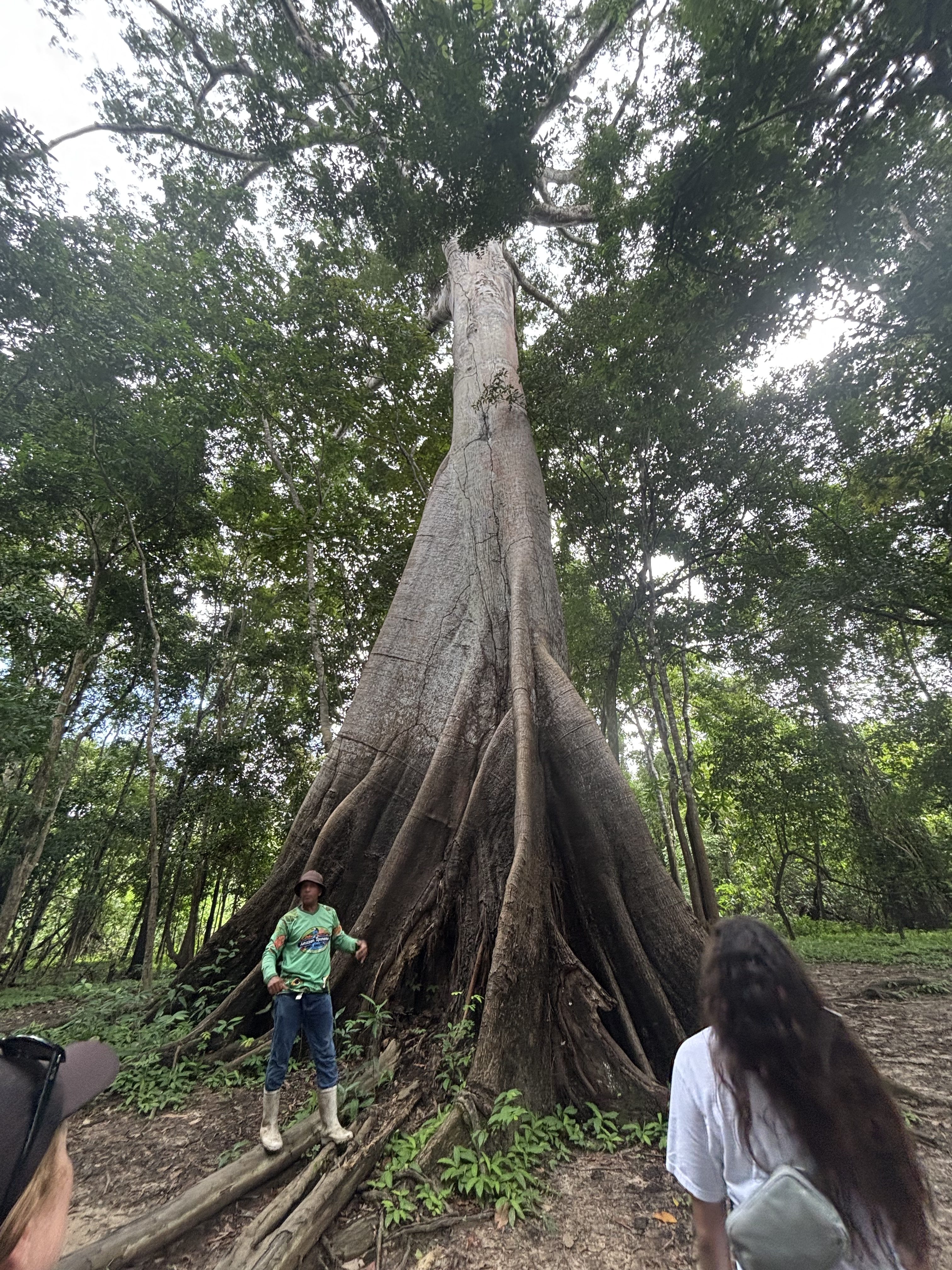
    The last trek was a walk in the jungle to look for sloths and to see the incredible tree of life, at 450 years old it is one of the oldest trees in the Amazon and hopefully the loggers don’t find it.

    That marked the end of our Jungle Trek, and we embarked on the trip back to civilisation and an unexpected day in a hotel, where Wooksie could enjoy an aircon room to cool herself down and I sat by the pool drinking beer and cocktails.

    However, the surprises weren’t totally over, as when we got back to the hotel we found we were sharing it with Amazonas, the Manaus professional football team who were using it as their base to prepare for their next game and to meet a genuine Plymouth Argyle supporter, which they were all so excited about.

    As with other things we have discovered on this adventure, once you have seen one the impact of the other diminishes. This was our first visit to the Amazon, but we had been in the Costa Rican jungle only 4 months ago, not to mention jungles in Thailand etc, in the end, they all look the same !