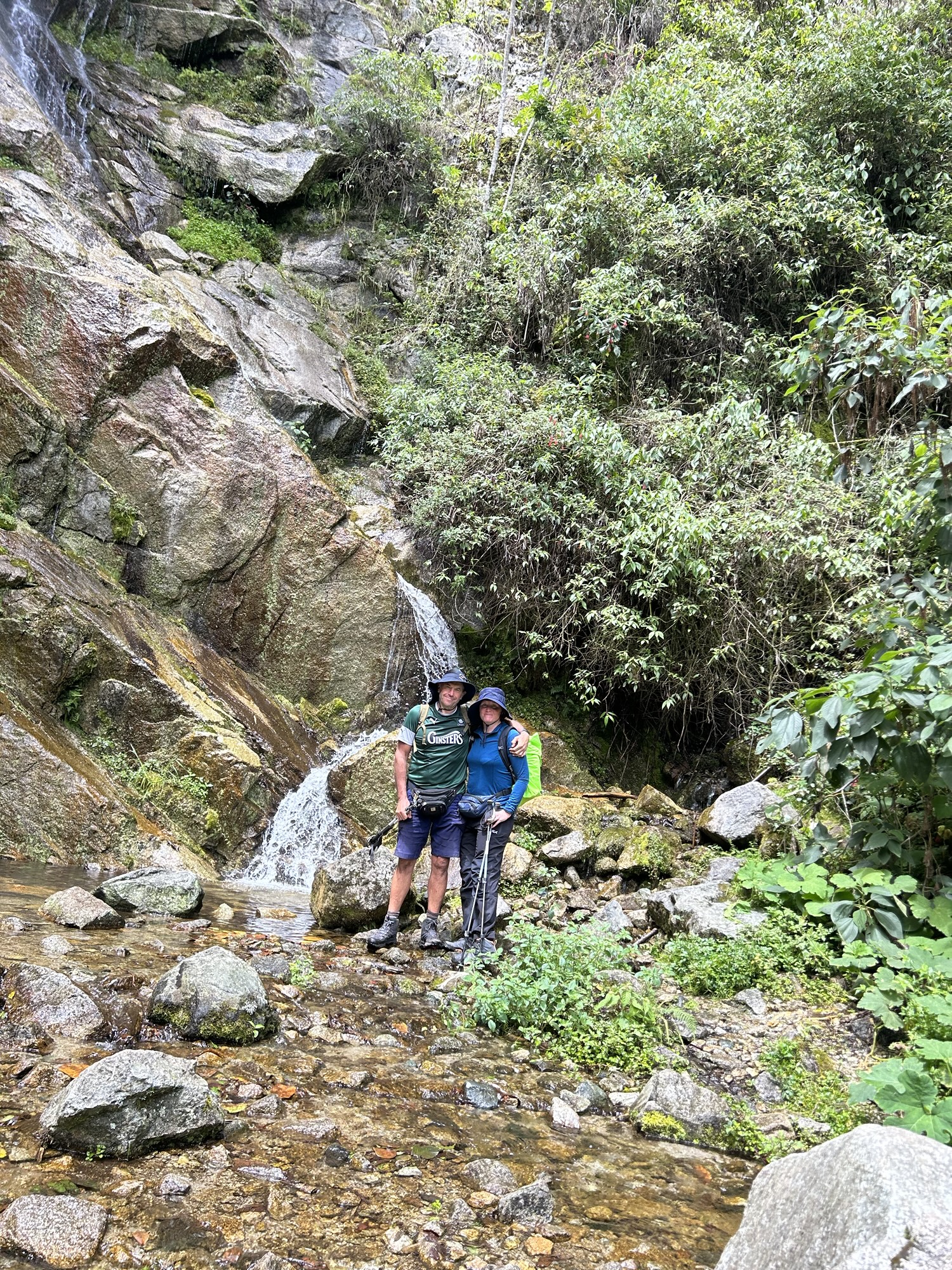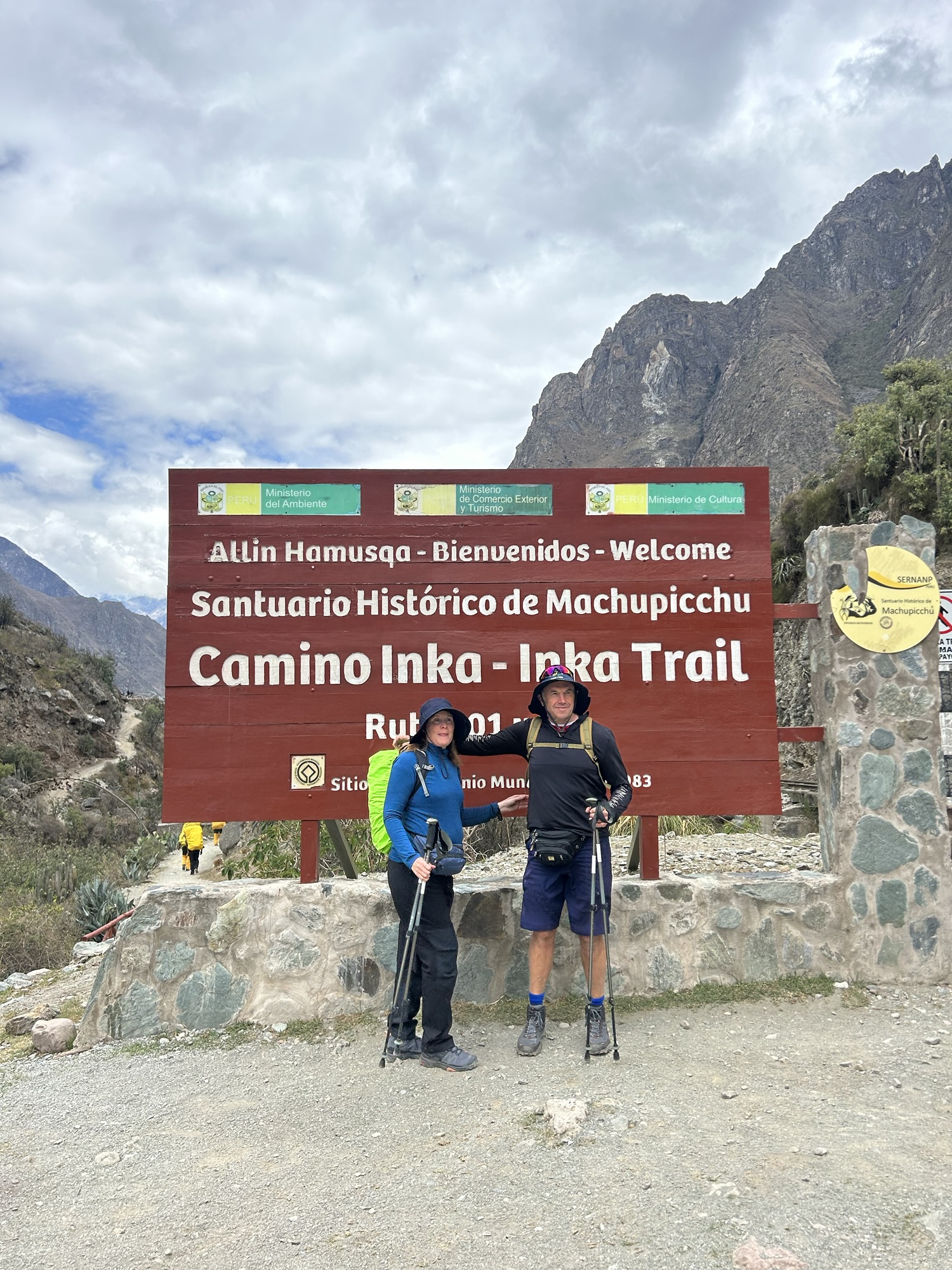
Eventually, we wandered into our second campsite. To find the porters had all been busy again, the tents had been built, the canteen tent was laid out ready for dinner and we had bowls of water sitting outside our tents for washing.

Another smashing evening chatting with our companions, good food and it was time to re-engage with my wandering mattress in the tent for another night chasing it around the tent floor. After such a long period without camping the hard ground started to take its toll so the early morning stretch was getting tougher.

Same routine with breakfast and then we set off on a long day of climbing. The downside of coming through the valley was that we were way below the altitude needed for the Sun Gate at Machu Picchu. If we had gone over Dead Woman’s Pass we would have been coming down so day 3 would have been the easy part of the journey.
The Incas were very busy step builders and we were regularly negotiating steep climbs and drops using the stairs they had built 500 years ago. The path meandered along the hillsides, dropping occasionally but it was never any relief, because whenever we went down, we knew we would be coming back up.

Best scenery of the trek
The scenery on day 3 was stunning, mostly we climbed through the cloud forest, which is pretty much what it says on the tin, the altitude of the forest means that there are shrouds of clouds in amongst the trees, I guess we would normally call the fog!
The comradery of our fellow adventurers was great but the strain of the climbing was making an impact on Todd’s knees and he really started to slow up, as did Wooksie who was struggling again as we started to hit altitude, plus the endless steps up through the terraces. The young people didn’t have any of these issues and I made it my business to try to keep up with them, but it wasn’t particularly successful.

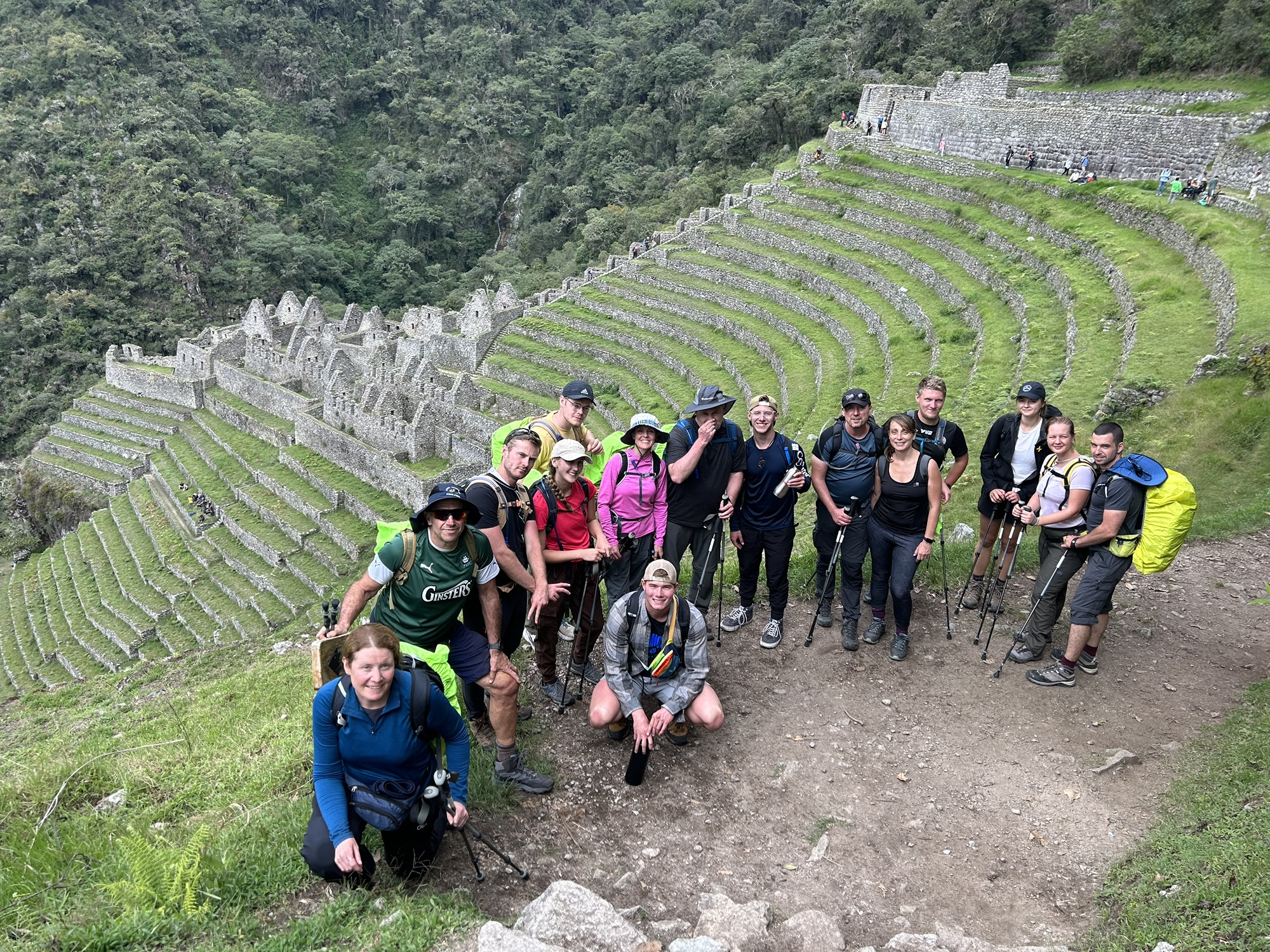
There were some spectacular structures along the route which left us in awe of the Inca ability to turn uninhabitable hillsides into fertile terraces for growing crops of raising animals, probably Alpacas and Lamas.
Into the afternoon we finally crossed the path coming down from Dead Woman’s Pass which marked the end of the serious climbing for that day. Soon afterwards we were at probably the most impressive of the remote Inca temples and settlements, stunning views, great photo opportunities and an end of the climbing.

We headed up for the last push to the next campsite only to find that we had actually arrived and it was only 10 minutes away. The porters were busy assembling tents on the terraces and putting the food together for the evening.

We had a big chunk of the afternoon to ourselves for recovery, which the young people used to climb up some of the trail to Dead Woman’s Pass to prove they had done it, meanwhile, Wooksies decided she would just go and have a lay down, whilst Todd and I went and found ourselves a nice bench and talked about to right the wrongs of the world, and the looking threat of a Trump presidency.
Precarious Loos

This was our last camp, and due to it’s location at the end of the trail it was very busy. The conditions were crammed and toilet facilities were at a premium. Each night the porters erected a toilet tent, and tonight was no exception, however, due to the precipitous location of the camp site, the toilet tent was literally hanging off the side of the cliff.
Going to the loo involved a lot of dexterity, but we had to hang on to the branch of a tree to stop us tumbling down the hillside into the bushes. There weren’t many late night visits to the loo that was for sure, and it wasn’t linked to heavy rain that started to fall during dinner.
The tipping tradition
The tradition of treks normally involves a tip for the porters which is collected as a form of thank for their services. In this case it was more a form of extortion, after dinner, the trek leader gave us a grand stand speech on how poor everyone was, and how we were rich.

The poor old cooks and porters were made to queue up in the rain, and then they were marched in front of us bowing while we applauded their efforts. It was clear that it was humiliating for them and embarrassing for us, in fact, I eventually suggested that they should be allowed to get in out of the rain as they had worked hard enough and didn’t need to be going through this ritual.
He then told us that we should have separate tips for the cook team and the porter team, and that each trekker should contribute $50 to each of the team, which was $100 each in total. Todd had his family of 7 with in, so in effect he was looking at a tip of $700 !
It is fair to say that this rather the dampened the atmosphere as nobody was carrying that sort of cash. Between us we clubbed together and created a decent contribution from the group.
Interestingly, when we did our feedback to Alpaca Tours on the bus home, everyone complained (without any co-ordination) and to be fair we were met in Cusco by representative who worked hard to resolve the problem, but be warned.