We all have a view of what to expect in Rio, but is it really like that?
First stage of our South American adventure is a little stopover in Rio de Janeiro. It is a vast city, so the first challenge is where to stay.
To be honest that one is easy thanks to Barry Manilow singing about the Copacabana Beach all those years ago, so we headed there, which is the main tourist zone, but also has a big contingent of locals at the weekend enjoying their city.
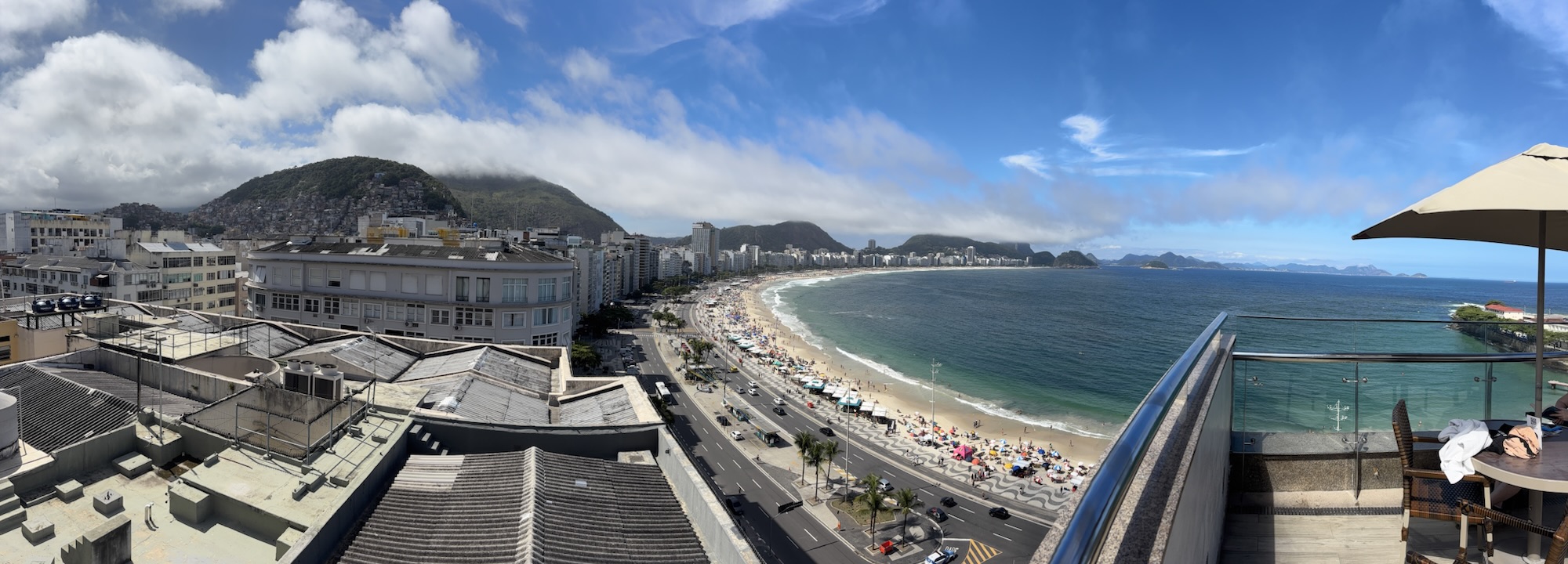
The famous beaches of Copacabana and Ipanema are right next door to each other, are both 4.5km long and only separated by a small headland. Ipanema is golden sand whilst on Copacabana there is white sugary sand and both make for great walks to enjoy the beach life.
There is something incredibly exciting about making it to these world famous beaches but in truth, they are similar to any Spanish costa, with high rise apartments on one side, and endless beach side cafes to sit and enjoy a coffee, beer or cocktail. They are famous for the beach football, volleyball and surfing and there is plenty of each, but the surfing is a bit overrated to be honest, I didn’t bother going in it was that average.
The city environment
Rio itself is not a beautiful city. It is set amongst steep, jungle covered mountains which give it a natural green beauty, but the human contribution has turned the valleys and plains into a concrete jungle of old concrete high rise buildings that have had no sympathy for the colonial history and generally overwhelm the older buildings. Probably the highlight of this is the modern Catholic cathedral, it would be hard to find an uglier building.
The massive natural harbour is one of the wonders of the world and as you move around the city there are numerous beaches in each of the suburbs. Having done a tour of the city, I can’t think of any reason why anyone would want to stay anywhere other than on one of the famous beaches, or near it if your budget is a bit tight. It is a very busy city, with traffic jams everywhere and I can’t imagine having much fun in the other suburbs.
The Weather
A big surprise was the weather, when we were doing our checks, it was consistently sunny and 30c. Our first day was overcast and turned into heavy rain, thunder and lightning, second day lots more rain and thick fog, third day we had clear blue sky and sunshine, so we have 4 seasons in 3 days, the only thing we didn’t get was snow. I guess there is a reason why the whole area is jungle, it gets lots of rain!
Luckily, we scheduled our city tour on the wettest day, but in hindsight this was probably a bit of luck, as we were able to enjoy the beaches when the sun was out.
Language
Having spent 2 weeks plugging away with Duolingo to learn some Spanish in preparation for Argentina, it was deeply disappointing to note that the Brazilians didn’t respond to my attempts at being friendly in Spanish. Now I do realise they speak Portuguese, but there are enough similarities to be civil.
I then realised that most Brazilians don’t speak anything but their own version of Portuguese, no Spanish at all (maybe on principle!), and they don’t speak English either, so the early exchanges in the beach bars and shops of the Copacabana were very hard work, which really surprised me bearing in mind it is such an attraction for visitors.
Global Cities
If I had to compare Rio with one city it would be Sydney, with the beautify harbour and beaches and a population that loves the outdoor life.
A few years ago, I concluded that there are some cities in the world that are very different to the rest of that country.
The first time I noticed it was on the US, where New York stands apart, Los Angeles was nothing like the rest of the US or New York, similar if you travel to Australia then Sydney is totally different to the rest of the country and London is the same.
The difference with London is that it is also the capital city, unlike the others. I put Rio into this category, as a global city, where people flock to experience that individual vibe.
In all those cities, you can stand and watch herds of people passing by and it is difficult to spot what race that country is. In Rio there is such diversity in the population that you couldn’t say “That is a Brazilian”.
The food
First impressions were pretty good from the beach front bars at Copacabana with lots of fish and steak with unusual sauces and tastes.
On the city tour we had a Brazilian BBQ which involves eating as much meat as you can. We were lucky enough to stumble out of a rain storm into a restaurant in Ipanema called Bodega Belmonte which was a really authentic dining experience and we had a great afternoon eating and avoiding the rain.
So, our tour of South America is up and running with a great start in Rio, one of my life ambitions achieved.
I guess the lesson from the trip out from London is don’t fly via the US to get anywhere, Newark airport is now on my blacklist along with Paris airport.
When we finally got here after 24 hours travelling it was typically clunky, and we could have done without being given a room next to the motorway by Radisson, but it’s all sorted now, and we are happy again.
My mate Jason Cole told me not to bother with San Jose because there was nothing to do there, as normal I ignored advice.
How wrong he was, we found a walking tour of the best sights that included TWO markets, eating strange fruit, chocolate and coffee tasting and we even cooked ourselves a meal in a café, and this tour generally proved that there is actually nothing much to do here.
We did learn that in Costa Rica their version of an orange is actually yellow, and moreover it tastes of absolutely nothing – which is weird.
So we went for a beer and watched the parrots giving the pigeons a bit of an airborne kicking in the park.
Clearly the Spanish and Portuguese weren’t interested and gave it a miss but at least we proved Jason’s theory, so tomorrow we have a long drive down to Porto Viejo on the Caribbean coast and then we go sloth hunting, by canoe, in the forest on Saturday, hopefully we will bag a couple for tea.
Les Carroz, French Gremlins and downhill mountain bike records
After the success of my Winter Season in the Alps and all that snowboarding, I decided that I would try the same with my other passion, mountain biking. The lifts are open for the summer French holidays, July and August, and the bigger resorts open for June as well.
My first visit was a family summer holiday 10 years ago, I loved the mountains and all the activities but unfortunately, I went home with broken ribs from a crash. I’d been back a few times since, normally bringing a mate along. I’d end up being more of a tour guide around the routes and annoyingly, they would be faster than me on the straight bits and invariably get lost.
Solo mountain biking
Consequently I would then waste a lot of time trying to find them so I wasn’t too fussed that I was going to be on my own, but it has to be recognised that downhill mountain biking is dangerous against pretty much any criteria, so I was mindful of the fact this could all go horribly wrong if I had a serious crash, minor crashes are a daily event but it’s often a very fine line between minor and major.
In preparation for my summer of fun, I’d invested in new Enduro bike because having the right gear is essential. This started as a plan to buy a second-hand bike to avoid the expensive rentals, but a great deal on a new one appeared so I bought it. It was a beaty, much better than the rental bikes so I was really looking forward to cracking on.
10 days and a 1000 miles after my mountain biking adventures on the borders of Scotland came to an end, I found myself in the French Alps at the home of one of Europe’s downhill mountain biking meccas, namely Morzine.
Technically I was in the next valley over, Morillon, which is part of the Grand Massif. It is also a mecca for those crazy road riding dudes who seemed to take fun in pedalling up the mountains. The mountain bikers as a smarter breed and use the lift systems as their means for getting up the mountains. They have also renamed themselves Enduro riders, is less of a mouthful and sounds cooler.
The drive down was complicated
A new first for me was the drive down from Bristol, as my wife wasn’t very interested in being an Enduro widow and she declined the offer to keep me company on the journey, so I had to do it on my own. This wasn’t without incident, normally we go via Dover, but I didn’t fancy a 14-hour drive on my own, so I booked the ferry from Portsmouth, so I had an overnight kip and a fresh start. The driving time was due to be 8 hours, so not much different to Calais.
What I hadn’t noticed was there was two ferry routes into France, and I booked the wrong one. We landed at Cherbourg not Caen, I set my Satnav and it said TWELVE hours, my heart sank, where had the other 4 hours come from, I just assumed it was a hold up and in the absence of any other options I set off, I worked out that about 1 hour additional time was due to Cherbourg rather than Caen.
I settled in for a very long day on the road with a heavy heart. I noticed that my route left the motorway and took me south on A roads towards Paris and even more depressingly, I noticed Bordeaux appear on some of the long-range signs, Bordeaux is as far from the Alps as anywhere in France. As I chewed over these unexpected developments in my mind it occurred to me that maybe the Iphone Satnav might be playing tricks, as there is more than one town with the name of my destination, so I cancelled the trip and reset it.
Then we found the source of the problem, the Iphone offered the fastest trip, but I hadn’t realised it offered the fastest trip WITHOUT toll roads. A quick change of settings and suddenly I was 3 hours closer to Morillon that I expected, absolutely wonderful, my world was a happier place. Unfortunately, quite a bit of damage had been done to the timescale by taking me west of Paris and it ended up being 10 hours, but still better than 12 hours.
What most people don’t realise is that the Alps are very hot in the summer, so I arrived at the end of a hot day and temperatures that felt like 30 degrees. I emptied the car of all the gear, including my brand-new mountain bike and put my feet up on the balcony, had a warm beer and crashed out. Luckily, I had bought one of those Dyson cool fans with me and it got to work on the heat.
First Gremlin attack
Next day, glorious sunshine and after spending the morning getting this sorted out, I decided it was time to test out my new bike. So, in the heat, I put on all the protective gear and collected the bike from the garage sweating buckets. The lift is only 50m from the apartment, so I pedalled around in all the gear to the lift and noticed something wasn’t quite right.
The lift was stationary, and the ticket office was closed, what on earth was going on. I checked in at the Tourist Information, the opening date had been delayed saving money. It opened officially, the day I was coming home. Not to worry, the lift at Les Carroz was open on the other side of the mountain.
Obviously, those Gremlins that had haunted my trip around the bike rides in the north of England had migrated to France, or the Gremlin jungle drums had got the local French Gremlins on my case.
Now I required the car, which was sat in the sun and showing 35c as the outside temperature and heaven knows what on the inside. In all the gear, strip the bike down, pack it in the car, jump in and drive for 30 mins, still with most of the gear on and sweating.
30 minutes later I arrive in Les Carroz after a drive through the winding mountain roads only inhabited by agricultural machinery and redundant Italian racing car drivers. As I approached the lifts I glanced up, and to my horror, the lift wasn’t moving. I could not believe my eyes, this cannot be.
I drove up to gondola station, surely this lift wasn’t closed as well. I parked outside the ticket office and walked over, it was clearly not open, it was as shut as a shut ticket office can be. I rested against the bonnet of the car and seriously considered crying as well as sweating, before driving back to Morillon. Those French Gremlins were having a right laugh today.
As I sat there, I heard a metallic clanking sound followed by a whirring noise from the direction of the lifts. I walked around the side of the building, and to my delight the lift had started running – we are all systems go and stuff you Gremlins.
Time to rip up the trails
I parked up, assembled the bike, got padded up and pedalled over to the lift ready sweating profusely. Except for one thing, I couldn’t find my lift pass. Those Gremlins had taken it out of my pocket and left it back in the apartment, but I wasn’t to be stopped, straight up to the little ticket booth and bought a one-day pass, we are off.
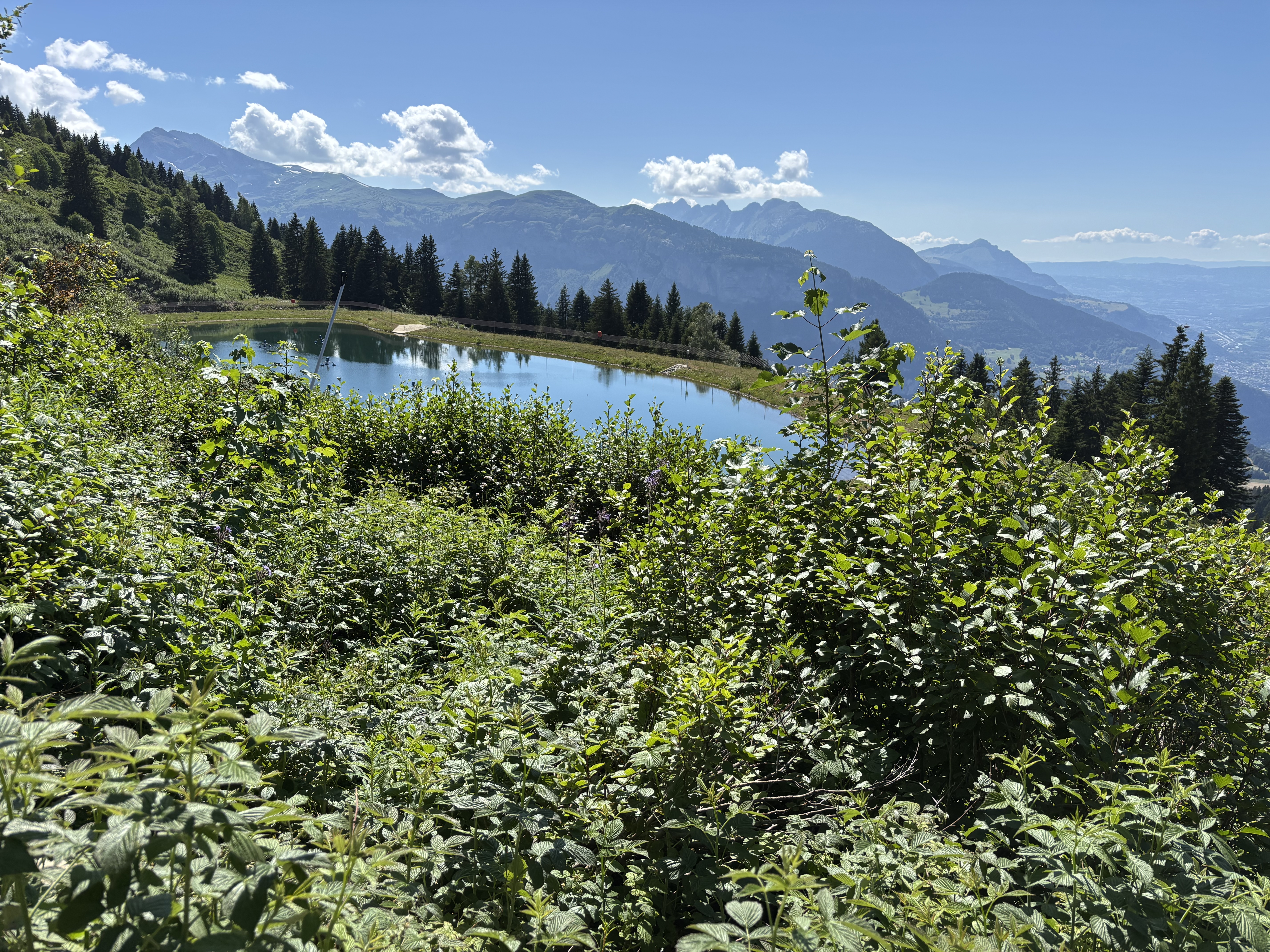
Finally, 2 hours later, I arrive at the top of the Les Carroz gondola ready to go. All the mountains have spectacular views and this is no exception, as always it takes me time to enjoy the serenity before heading down the runs.
For the first time I was here on my own, I didn’t have to take a mate on a tour of the runs for a change. The French grading system is different, all the runs are incredibly steep, running through trees, with technical section and large berms (banked turns).I was never able to do the very difficult black runs (jumps and serious danger) though there are normally routes around the big obstacles, I was capable enough on the red runs, going carefully, these tend to be gnarly and difficult, so more of a challenge that a pleasure, which left the blue runs. Wider, faster, challenging but most of all, fun.
This was probably my 4th trip to this bike park and as I stood there, armed with the right equipment and relatively empty slopes, I decided that I was going to stick to the blues. At my age I’m not going to get much better, the difficult stuff is more dangerous on my own, so I would just do the blue runs and get to know them a bit better.
Most sports folks use an app called Strava. It records your times against previous visits, and it also grades you against other athletes against various categories. I don’t tend to look at my comparisons because I am normally somewhere in the average category which isn’t particularly motivational. However, last summer, I turned 65 and I happened to look where I sat in the all time Over 65 categories, and I was rather pleased to note that I was quite near the top of this category, clearly the competition was either dying off, had been seriously injured and retired, or had finally grown up. So, I had a target, to be the fastest old bloke on the mountain.
Les Carroz bike park is a little gem. Within 10 miles are some of the most famous bike parks in the world and dwarf this one, but it is being expanded but it only has about 6 runs and they are fabulous. They mix cross country and technical Enduro riding with the adrenalin pumping of steep down hill drops that take you from the top, across the forests and back down to the car park in about 15 minutes of jarring, bouncing and skidding excitement.
The first section of the Wood Rider runs from the Gondola through the woods and into some complicated berms that are more like being in a corkscrew as they twist around and get steeper. One of the problems at the moment is they are very very dry, so the sections where people are breaking are becoming very soft so they are like hitting a sand bunker, so if you don’t get it right you are over the handle bars before you know it, happened to me a few times until you know where they are.
Woodbiker trail
Second section is a run into the woods that is traversing the mountain and involves lots of twists and turns rather than speed, but it is all about keeping the bike balanced and keeping up momentum. When it is wet this can more complicated as there are streams running down of rocks that make things very slippery, but that wasn’t a problem on this trip.
Third section takes us back to the car park and involves much faster and steeper sections with more obstacles and “features” including flat tops so you can get some air under the wheels as you take off a little.
Fastest oldie on the mountain
So, at the end of the afternoon, and equipped with my new bike, all the frustration was gone. A wonderful afternoon blasting through the forests and Janner Boy is now the fastest old bloke on the mountain, having set the fastest times since the park opened in 2016 – yessss.
Les Gets, La Chatel and Avoriaz still to come, but today is going to be difficult to beat.
Over my lifetime I have had many close encounters with disasters that could have ended much worse than they did. Most normal people don’t get themselves into these situations in the way that I seem to. This story is about the first of those close encounters and includes a bit of history about a very unique school I was privileged to attend.
Born and bred in Plymouth, I grew up loving the sea and still do. My dad was a shipwright in the dockyard and worked on boats all his life. Even though he was an accomplished student at school he wasn’t interested in following my grandad into the city council treasury, he wanted to work on boats and by the time he was 16 he had built his own canoe that he used for fishing.
A different era
This story is from an era where education was bigger than just books, and value wasn’t simply based on whether the school talked you into going to university, so some readers may find the fact that a school had its own sailing club is a bit odd. But then again, my school was a bit unusual, it was called Widey Technical Secondary School, this was an experiment from the early 1960s when educational visionaries recognised that not all bright kids were destined for jobs in banks.
The school focused on given bright kids who had passed their 11 plus a route to develop craft and engineering skills, not just academic skills. Consequently, the school had a fully equipped metalwork lab with lathes and lethal equipment nobody would dream of putting near kids (or most adults) nowadays. It also had a woodwork lab and by the time he was 15, my mate Paddy McDermott had built a boat for his CSE project and happily rowed it down the Tamar River with his mates.
In hindsight, this was all genius, because the major employer in the city was the Royal Naval dockyard and it enjoyed the benefits of a grammar level school churning out pupils ready to go into the dockyard as high performing apprentices in engineering. If only education and industry were as joined up now.
Unfortunately, I wasn’t one of the school successes. I didn’t seem to have much in the way of talents for woodwork or metalwork. The first project in woodwork was to make a dovetail joint which never seemed to fit properly and went on for months, and metalwork seemed to involve hours of filing which was very boring.
It wasn’t helped by my old man taking the mickey out of everything (he was a very good craftsman) I created and was assertive that I should never go into the dockyard. Generally, and unlike any of the other boys, I lost interest in these craft topics and by the time options selection came along I chose History and French.
Widey School Sailing Club
However, I still loved the sea and was very excited to be able to join the Sailing Club when I was old enough (there was a minimum age, 13 I think). The school had a little flotilla of boats for us to learn on. So, at the start of the summer, we all had to head to the Barbican and do our share of sanding and rubbing down to get the boats ready for the summer season, all under the watchful eye of the teachers, Max Wall and Paddy Padfield, we had 4 different types of boats.
A GP14, this is the big boat with 3 people, a helm and 2 crew and normally had a teacher in charge
A Mirror, this was much more modern than the others but only 2 people, I was never one of them.
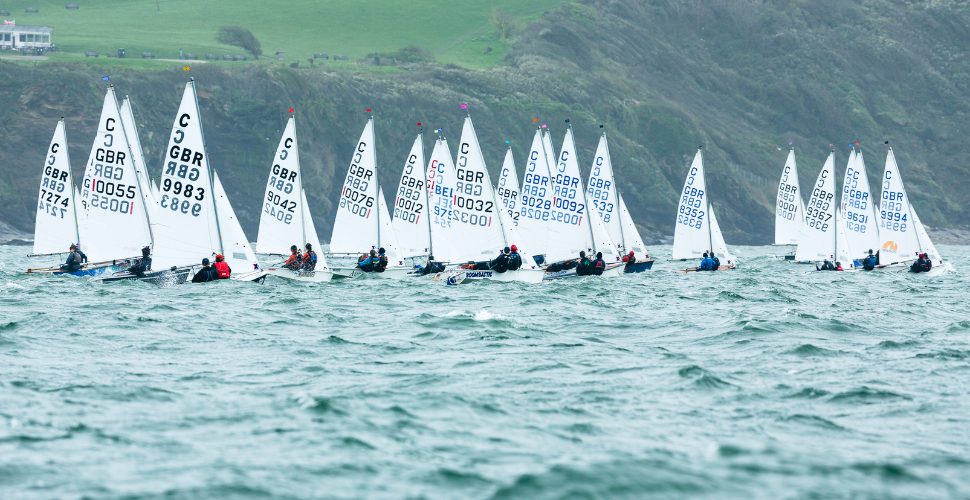
Cadets, a little research has unearthed that these are designed as training boats for youths, and we seemed to have a few of these.
Safety boat with an outboard motor that pottered around following the flotilla rescuing people.
3 times a week we would look forward to going sailing, Tuesday and Thursday evenings and Saturday morning. One of the first things I learned was that we only went out when the wind was below force 4 as a safety precaution, I also learned that force 4 winds cause the tops of the trees to move. Every sailing day I’d be checking the tops of trees as we moved between classrooms keeping my fingers crossed, we’d be going out that night, but it often ended in disappointment. At the end of the day Plymouth is a windy city on the ocean, and I was amazed how many days were lost from high winds.
It’s fair to say that I didn’t turn out to be a brilliant sailor. Maybe it was lack of attention to detail or in fact attention to anything I was told, the boats were a bit uncomfortable and when I did go out in a Cadet they seemed to have a habit of capsizing for some reason, so more and more time was spent in the GP14 with the teachers or in the safety boat. It was almost as if the capsizing was my fault and I couldn’t be trusted.
The safety boat could be more fun as my love of the sea had got me into fishing, if Paddy was driving, I could take my fishing gear and a hand line and drop the lure out of the boat and do something useful with my time as we followed the flotilla around Plymouth Sound. Max didn’t approve of the fishing from the school safety boat so that curtailed my activities on occasions.
Widey Techn annual sailing day, 1974
Then came the annual Widey Sailing School Day out. We all congregated at the club on the Barbican at 9am with our packed lunches, warm cloths and looked forward to our freeby day off school. The weather didn’t look good, grey skies and spitting with rain, it seemed a bit windy to me but off we went anyway. Circumnavigating Plymouth Sound took most of the morning, backwards and forwards trying to get to Cawsand Bay, then more backwards and forwards as we tried to get out of it again.
Unfortunately, I was in the larger GP14 again under the watchful eye of Max rather than the Safety Boat, as I’m sure the fishing would have been good but instead, I spent the morning banging my knees and toes on the keel board thingy in the dingy.
Eventually, we pulled into a little cove on Penlee Point and onto the beach. I knew it well as we often pulled in there in my dad’s boat, I used to be allowed to row around in his tender, attached by a rope because I couldn’t be trusted, but at least I was afloat and unsupervised. Even though the beach was sheltered, outside the cove we were a good mile outside the protection of the Plymouth Breakwater, out in the English Channel.
As lads we messed around on the beach, ate our lunch and did most of the things we were told not to. Eventually the teachers couldn’t take anymore and decided it was time to go. As the boat allocations for the trip back were being made, I was amazed to be allocated to one of the little Cadets rather than the Safety Boat.
Dicing with death
That meant I had to concentrate, and as we pulled away from the beach, I got a lecture from the helm, I bloke called Robins who was a couple of years older, about doing what I was told. We could see the sea beyond the cove and the waves were now bigger as the swell had picked up in the channel. As normal I was in a scruffy mess, my lifejacket was untied and the rope was floating around near my feet and getting in the way. So for my own convenience rather than any thoughts of safety, I tied it around my waist and was ready for action. We were the first boat out of the cove, so it was very exciting.
As the little dingy pulled out we needed to tack quickly and run with the swell. In a swift and totally unpractised manoeuvre, we swung into action. As we hit the swell, “Ready about” was the shout and before I knew it there were sails and bodies flying everywhere and we new it we were in the freezing cold sea. Robins gave me daggers as we tumbled over the side, I don’t know why as it was his fault.
I felt myself come to the surface but for some reason couldn’t find any air, after a bit of panicking and fighting for air, I realised I was under the mainsail and swam out from underneath to find fresh air and a deep green/grey sea everywhere.
Initially, being wet and cold, I just wanted the safety of being back in the boat. I started to swim towards the boat, but smart-ass Robins got there first and clambered in. Unbelievably, with his weight changing the balance of the boat, it righted itself and the wind caught the sail and off he went, admittedly largely out of control but putting an alarming gap between me and salvation.
I remember those minutes in the water as if it was yesterday, I guess that is what shock does to your mind. There was no one around, the other boats were still coming out of the cove, so I was totally alone. Off Penlee Point the swell was bigger as it came around the headland, I was looking around at the swell lifting and dropping me back down in what felt like huge valleys of water., with white crests on the top of the waves slapping me in the face.
I remember thinking, “Thank God I did my lifejacket up”, because if I hadn’t, I’d probably have slipped through it and gone down under with the weight of a woolly jumper and other cloths. I then noticed my shoe bobbing along on the next wave and thinking I need to rescue it, or my old man would give me a battering so swam off to save my shoe.
In the distance, our dingy capsized again, which was excellent news for me, and I started to swim for the boat again, it was a couple hundred yards away by now, but I had to do something. Then the GP14 appeared with Max in charge, as it sailed past surfing down one of the waves he shouted, “Are you OK”, probably one of the daftest questions ever, of course I wasn’t OK, I was about to drown. “Yes, I’m fine, sir” I shouted back, so he sailed off and I was left bobbing around on my own again, trying to spot my shoes.
My saviour
Finally my saviour appeared over the crests of the waves and surfed past me in the form of the Safety Boat with Paddy at the helm. As with the GP14 he did a first pass, surfing down the face of one of the waves, he shouted “What are you doing in there”, the sort of question a teacher asks a pupil I guess, so I responded “Fishing, what do you think”.
He then went around and skilfully came alongside me, using the boat to protect me from the waves and was about to dragged me onboard when I spotted my shoe, so I wriggled clear and swam to get the shoe as I couldn’t leave it behind. I swam back and was then heaved out of the sea by the crew of the safety boat. I was dripping wet hugely relieved that I wasn’t dead, but a lot less enthusiastic about sailing than I had been.
We then went over and rescued Robins and secured his dingy to the rescue boat before hatching the plan to get us home. Annoyingly, that plan involved me getting back in the Cadet with Robins and sailing it back to the Barbican. I think it was on the basis of kill or cure, and it would help us get over it any fears that might have developed.
It is fair to say that the atmosphere between Robins and me was a bit frosty, and we didn’t talk much on the way back, so some reason he seemed to blame me for his incompetence, but someone has to be blamed, I guess.
When we got ashore, I dried off and was on the bus home to tell my mum as soon as I could. I honestly don’t remember going dingy sailing again until I joined the BBC Sailing Club on the Thames 15 years later, but that was more to do with a bar and BBQs than a desire to be a sailor.
That night, and for many nights later I relived that experience in the water. I still do now, which is why I’m writing this blog as the memory is so vivid. I still have nightmare moments that focus in on “what would have happened if I hadn’t done up that lifejacket to get rid of the strap”.
I’ll be forever grateful to Paddy, the teacher for rescuing me and the sight of the Safety Boat surfing along the tops of the waves actually gave me hope, as I thought I was done for.
The process of writing this blog has left me with two thoughts.
What a brilliant education idea Technical Grammar schools were. They were totally designed to create employable young people ready to go into engineering, we have absolutely nothing like that anymore.
Shock, if this incident could be so embedded in my head, what must it be like for people who have much more severe experiences, whether it’s the traumatic things we see on the TV or the experiences of the armed forces and rescue services that are happening all the time. Maybe if there are lots of them, they overwrite each other or maybe it was because I was young.
This wasn’t to be my last close encounter with disaster, but it was my first and I’ve never forgotten it.