After a few long hauls in the last 18 months, and looking at various ancient places, it dawned on us that there were big chunks of history and adventure closer to home that we had not explored yet. In particular, we were thinking of Jordan and Egypt, but with old Trumpy encouraging people the lob missiles around we decided Turkey was a safer bet this year. In fact Turkey has some of the most interesting history of anywhere. At the crossroads to Europe and Asia it has been a cradle of history and hosted most of the empires that shaped our European culture, where the Greeks met the Persian, where the Mongolians raided from the east, where the Crusaders from England came with their religious fervous and the Silk Road runs straight through, it even has it’s own continent, Asia Minor. The original plan was to try out an organised tour, but when I showed Wooksie the various itineraries she pointed out that we were supposed to having a holiday not some of archaeological expedition, so once again we ended up travelling independently and organising the whole thing ourselves. As with other trips our plan is to got to the key centres, then organise visiting the places of interest using Tripadvisor or Get Your Guide, which has worked well in the past. We had been to Turkey 32 years ago, and remembered it being a very cheap place to live, travel and it was full of cheap, rip off, designer goods so we could get our Xmas shopping in early, We decided to start in Istanbul, otherwise known and Constantinople and Byzantium, with all those names, Sultans and invaders it was bound to be fun, where east meets west and all that. I was intrigued by the stories of underground cities where ancient people hid underground from invading armies. So this was top of my list of things to do, a lot of them are built around Goreme in the Cappadocia region, fortunately this was also the place famous for balloon rides, to Cappadocia was added to the list. To keep Wooksie happy, we included a 7 day holiday break in the seaside resort of Antalya. It also had the benefit of having a lot of history in it’s own right, with various relics of the Roman and other empires, it meant we could keep up our historical theme, as well as finding a nice place to settle for a week.
So, all the flights and hotels are booked, Turkey here we come, show us what you’ve got!
After waiting 8 years to visit the Alps, I was giving it my best shot to make sure she had a good time. It started badly when we went on a more arduous trek than I’d intended, but I’d got my house points back with the leisurely day out in the beautiful town of Evian, the place that invented bottled water.
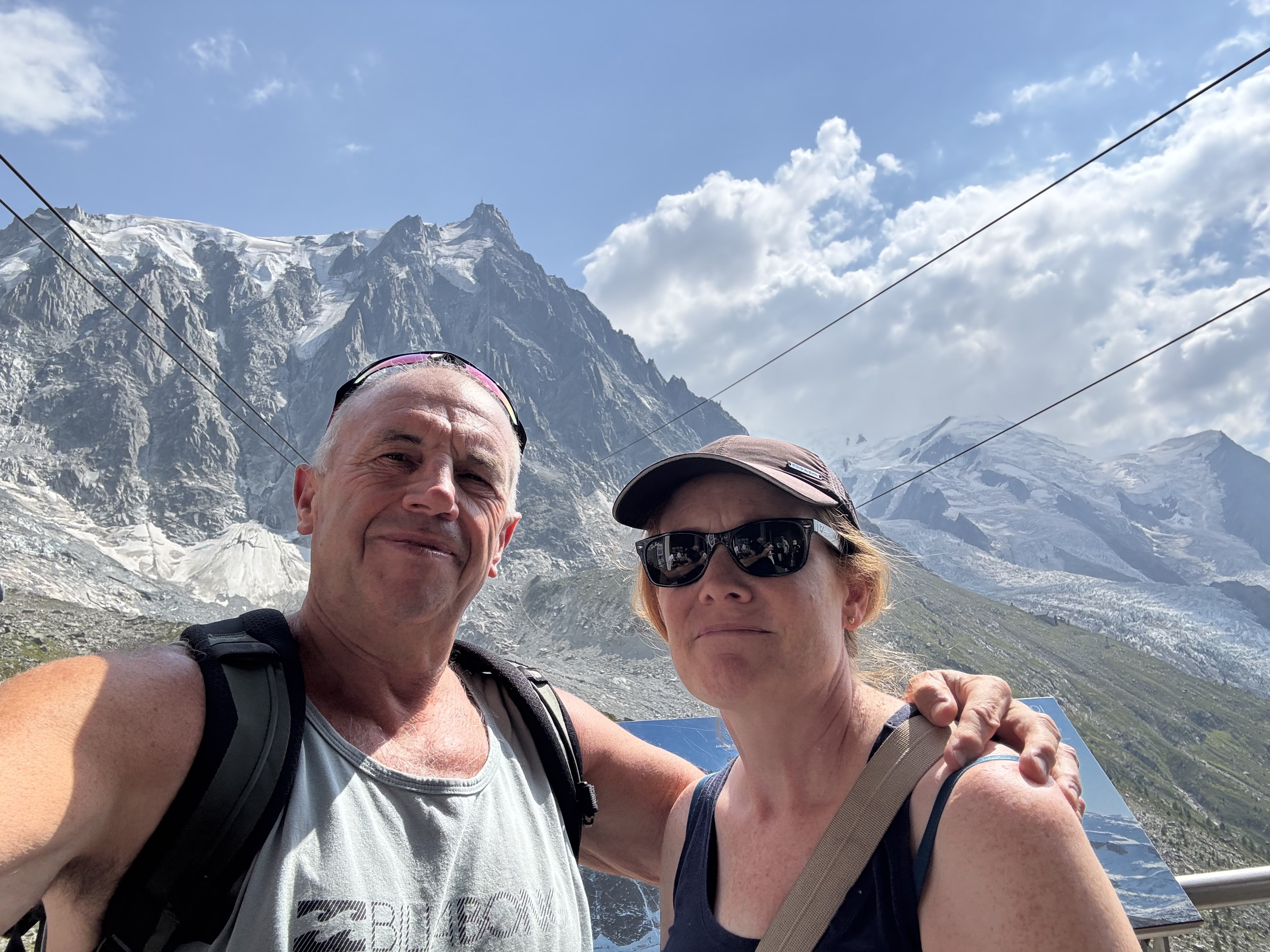
The big event of the week was Mt Blanc, and we decided to let the gondola take the strain to get to the top of Mt Blanc, ahead of my suggestion that we walk up to the mid station. L’Aiguille du Midi is a giant gondola that runs from the centre of Chamonix to a peak that provides amazing views of the mountain, as long as it’s not cloudy, of course. To get the view, you have to go to the Panoramic top station; the mid station just gives you a nice view of Chamonix.
As it was Wooksie’s week, I thought it was probably time we went to see one of the most famous mountains in the world. I went online a week early and booked ourselves a 10:30 gondola so we would be overlooking the peak before the afternoon clouds arrived.
Wooksie was almost excited with the treat, as it promised little walking and a nice lunch in our old stomping ground of Chamonix, where we learned to snowboard many years ago.
We were up early and drove to Chamonix with plenty of time for coffee overlooking the mountain before our slot. All was going well until we actually arrived in Chamonix and realised that Google Maps had done too good a job and dropped us in the centre rather than at the big car park. We managed to squeeze into a small car park and agreed to say no more about the £35 per day charge.
The sky was clear and the view of the Mt Blanc peak was stunning as we supped our coffee and looked forward to the trip. Before we knew it, the time to join the queue arrived, and after 30 minutes we reached the departure gate with the QR code tickets dinging as they were presented. When we presented ours, there was an alarming buzz. Obviously, there was a problem with the gate.
The steward came along and checked our tickets and, to our horror, the date on them was 1 week later. I had chosen the wrong Wednesday on the portal, and we were promptly kicked out of the queue. Wooksie didn’t look pleased.
At this point, I have to admit this is beginning to become a trend. It isn’t the first time I’ve mis-booked in the last 18 months. I am not sure if this is a characteristic of making so many online bookings that the odd error is bound to happen, or if it is a characteristic of the onset of my dotage.
I ran around to the ticket booth to try to exchange the tickets. “Non” was the answer from the scary lady behind the glass. We had two options: come back next week, which was out of the question, or buy tickets for today and write off the £100 worth of tickets we already had.
Wooksie wasn’t particularly communicative, so I made an executive decision and bought more tickets, but unfortunately the next lift wasn’t until 15:30, so we had four hours to kill. “Cheer up,” I said. “We will go and have a smashing lunch in a beautiful town in a wonderful location,” and we headed into town.
Killing two hours is one thing; four is something else, especially if all the shops shut for lunch. We had a nice lunch and, when we ran out of things to do, we sat in the shade and I fell asleep. It didn’t help my popularity, to be honest.
At 15:30 we were back at the gate and started queuing again, and for the next three hours it felt like the only thing we did was queue. We queued to get to the mid station gondola, then we queued again to get to the top station.
The Panoramic station at the top is an incredible construction with an amazing history. The views across into Italy are stunning. Unfortunately for us, it was now late afternoon and the clouds had amassed around the peak, so we did not have the view we had hoped for.
We weren’t at the end of the queues even at the top. We had to queue for the photo in the glass window, which involves stepping out over a vertical drop that needed a leap of faith and hoping the glass didn’t break. Just to be safe, they gave us slippers so we didn’t crack the glass with our boots.
On arrival at the top, we were given a return schedule on an allocated gondola. So, we queued to get each of the gondolas back down.
By the time we got back to Chamonix, we were exhausted from queuing, it felt like we had climbed the mountain itself.
We were glad to be back sitting down in our air-conditioned Passat.
The fun wasn’t over, though. That night we returned to our lake and watched the biggest eclipse of the sun for 90 years from our bar, in the company of our Brit pack friends.
I hadn’t covered myself in glory on this trip, but it ended well when I contacted the gondola online helpdesk and explained my error, and they immediately gave me a refund.
Wooksie insisted on doing nothing the next day, so I went for a mountain bike ride to join in the spirit of the Worrld Enduro championships that were happening in Morillon, unfortunately I had a bad fall, resulting in a badly sprained wrist and cracked ribs.
I didn’t get much sympathy to be honest, so next day we went for a walk and things really took a bad turn.
We saw lots of cars and people heading along a nice-looking trail into the woods. Unfortunately, the trail through the valley turned into a trail up a cliff.
We followed it for 30 minutes, with Wooksie getting redder and angrier and inferring that I had planned to kill or injure her.
It seemed appropriate to call a halt to our trekking, and we went back into Samoëns for lunch and a beer. Unfortunately I lost the keys to the car for a while as well, it wasn’t a good day.
Even after 35 wonderful years together, she still thinks I actually plan to do things to cause her pain and make her annoyed.
They are all honest efforts to have a good time; they just don’t all work out well.
I got the distinct impression she was glad to head home, a bit like the Apprentice with his broken arm and The Mechanic with his broken fingers.
After the dramatic visit of The Apprentice, who went home with a broken arm, and the visit of The Mechanic, who also went home with seriously damaged hand ligaments following their mountain bike crashes, it was time for Wooksie (long-suffering wife) to enjoy a holiday in the Alps.
It took me eight years to persuade The Apprentice to come to the Alps, and despite us owning the apartment for eight years, this was Wooksie’s first summer trip as well. It has taken me that long to persuade her that there are more things to do in the mountains than just skiing and mountain biking. I could tell that she wasn’t convinced, so I promised to be on my best behaviour and that we would just enjoy the scenery, with nothing too strenuous.
On the first day, things started badly. I planned a nice walk through the mountains, heading up on the Morillon chairlift and coming back on the Samoëns lift, 5 km away and 200 m lower in altitude.
It all seemed so straightforward until we started walking. I had assumed we would walk along a gradual decline on the side of the mountain. I hadn’t anticipated that we would be clambering down steep gradients into valleys and then back up and over ridges, descending and climbing a total of 700 m, rather than simply dropping 200 m.
We eventually arrived in a sweaty condition and Wooksie wasn’t in the best of moods, but the day improved and ended with a flat walk back along the Giffre river valley. However, I had definitely lost house points.
The next day, I decided I needed to avoid any additional crises, so we jumped into the car and headed for the place where they invented water, or rather bottled water. It’s still quite amazing that someone thought of bottling water at Lake Geneva, sticking the name of the little town on the label, and somehow becoming a multi-millionaire.
Part of the scam seems to be that it comes from a specific well, but the water looks and tastes incredibly similar to the very clear waters of Lake Geneva, just a few yards away.
To be fair, the town of Evian is very pleasant. Sitting on the shores of Lake Geneva, with views across the lake to various towns and cities on the Swiss side, there are regular ferry services across the crystal-clear waters.
It is clearly the home of wealthy people, with various beautiful houses and buildings spreading along the waterfront. There are several marinas, restaurants and cafés overlooking the lake and keen to sell you coffee or food, depending on the time of day.
A few hundred metres back from the lake is the main drag, with a wide range of eating places, specialist ice-cream and cake shops, and all the things people need to kill an hour or two and hang out in the shade, because it was very warm there in August.
The mountains, valleys and waterfalls in this area are spectacular, so it makes for a really nice day out and, best of all, I didn’t injure or annoy Wooksie. In fact, she seemed to have a nice time, so it was back to Morillon and a couple of beers by the lake in the evening.
The biggest achievement of the day was that I had got some of my house points back and could continue the week with more confidence. The rule of thumb is now: “Avoid any activity where I can’t predict the outcome.” This is hardly the spirit of Rare Adventures, but needs must.
It took me eight years to persuade one of my best mates, The Apprentice, that he should come mountain biking in the Alps and that we would have a great time, riding in the sun during the day and drinking beer by the lake at night – what was there not to love.
Massive storms, floods, diverted flights, broken bones and a long lost son.
Over the last couple of years, we have established an annual boys event on the bikes, 2 years ago we did the North to South Devon bike trail, a 100 mile ride across Dartmoor, with a night in a country pub with a lot of cans of beer on the train home to celebrate our achievement.
Last year the plan was to ride my 50km route around North Somerset, checking out the pubs as we went, but this was sabotaged by VW Festival, which was taking place exactly halfway round the route on the day of our ride. So, we included it in the schedule, camped overnight, and made a video blog of the chaos of that day.
So it was with some trepidation that my mate agreed to come on the trip, and to be fair things did not start too well. I arrived the day before on a 7pm flight into Genevea and tried to make the trip to our apartment on public transport, but was sabotaged, I was caught in a huge thunder and lightning storm that shut down the entire train system in South West France and left me stranded with a £70 taxi bill.
When The Apprentice flew the next day things got significantly worse. The region had another huge lightning storm in the evening. It shut down Geneva airport, created torrential rain, as well as the train network. His flight was heading for the Geneva until 30 minutes from landing. I was poised in the apartment preparing to leave to pick him up when his Easyjet flight path suddenly changed towards Lyon, and then even worse diverted again towards Nice, basically he was going on a tour of the airports in South West France. Luckily he stocked up with beer in the flight.
After refuelling at Nice, they took off and flew back to Geneva now the storm was over, but no, they went to Lyon because they were now too late to land in Geneva. After sitting on the Lyon runway for 90 minutes waiting to be unloaded, he finally got on a bus and finally at 5:15 am, 10 hours late and he had been to 3 airports.
By the time I picked him up we arrived back in the apartment at 7am, and the enjoyed a beer on the balcony watching the sunrise, “welcome to France mate”.
So, after only a couple of hours kip, we decided due to tiredness, to skip mountain biking for the day and go for a walk in Cirque de Fer a Cheval, an amazing canyon with waterfalls everywhere. Unfortunately, the storm from the night before had caused the floods down through the valley and surge had washed the roads away and it was all closed, in fact, even worse a woman had been killed when a bridge was washed away but the surge.
Undeterred, we ignored the roadblocks, parked near the Cirque, reviewed the damage created by the storm surge and did the walk anyway, leaving my mate amazed at the beauty of the Alps at it’s best, even though bits had been washed away the night before. In hindsight and having recently watched the scenes from the water surges in Nepal, I’m not sure that this was one of my better ideas.
That evening I introduced my mate to the “Morillon Massive”, the group of Brits with homes in the village that gather for beers, by the lake in the summer or by the gondola in the winter. My mate got to enjoy sitting in the sun, watching the sunset looking west, and looking east towards the orange glow on the mountains from the setting sun. The Apprentice was falling in love with the Alps.
We had our evening BBQ on our balcony, investigated the booze cupboard and I presented him with a Rare Adventures T Shirt as a memento of that moment. Unfortunately, he has put on a bit of weight lately so the T Shirt wasn’t big enough, this list of bad luck was getting longer.
The thing is, when you have been friends with someone for 40 years, and have managed to get up to all sort of mischief, there is a never ending list of stories to reminisce on, all of which get funnier the more you have to drink.
In our block there is a little bar called the Tetras, and in the winter it is a major distraction when trying to get back home, as it is difficult to pass it after a good day on the piste, especially with the Morillon Massive are gathered discussing the day. It has been noted by other friends that the landlord, indomitable Flo. has a striking similar to The Apprentice. So this was the first opportunity to put them side by side, I will leave you to form an opinion but the word “love child” does come to mind, and Flo did actually smile and look happy, or maybe he was just bemised at the attention of the latest member of the Britpack.
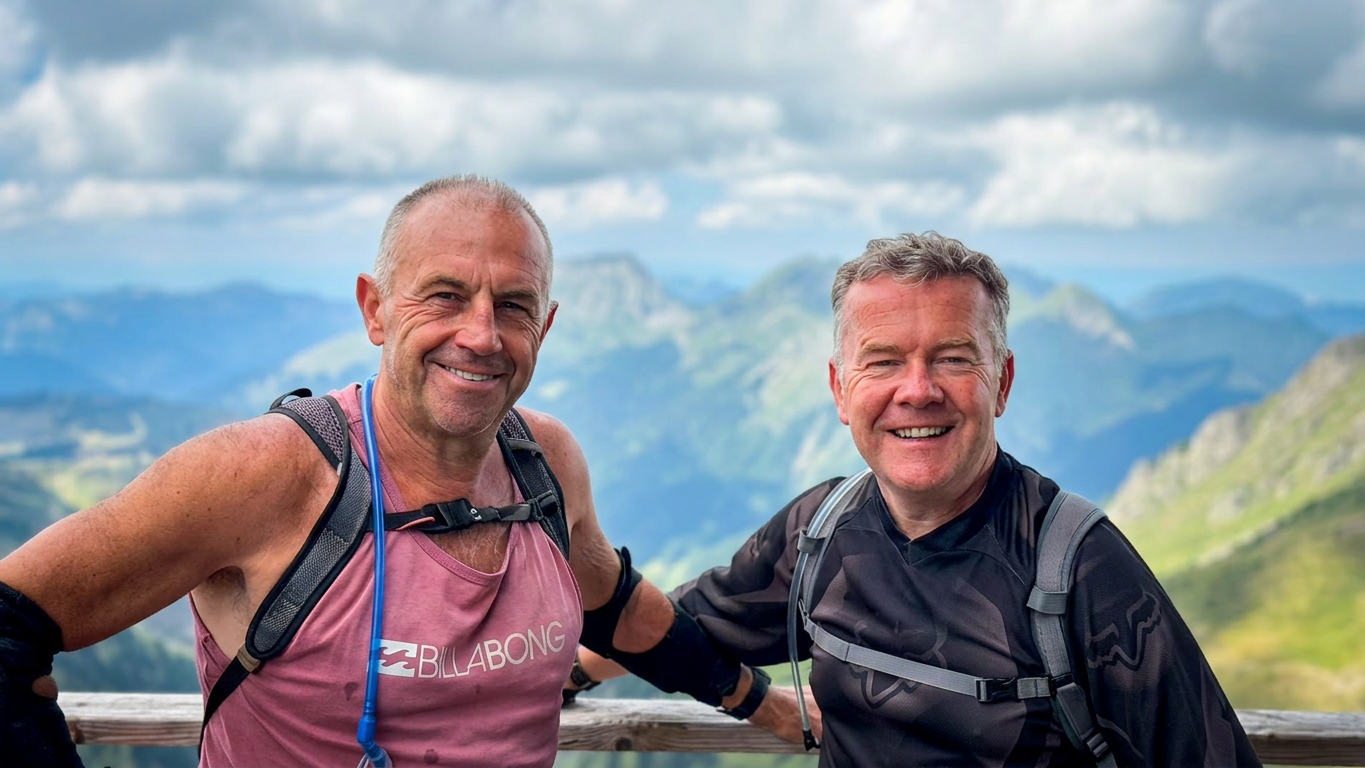
Next day, we headed off to Avoriaz to show him around the spectacular scenery before doing the incredible bike trails in La Chatel. We made it safely to the peak on the French and Swiss border with some of the most stunning views in the region.
In one of those amazing coincidences that only seem to happen to me, I heard someone shout “Hello Rod”, in this remote corner of France, one of my pals from walking football just happened to get off a lift at the split second I was putting on my helmet, 30 seconds later he wouldn’t have seen me, an unbelievable coincidence.
The Apprentice and I headed down the trail, stopping for photos, and then into the last section into the Avoriaz valley for coffee when disaster struck. On the very first trail of the day he managed to go over the handlebars on one of the gravel access roads.
I had stopped to wait for him and was looking at the view when I heard a scream and a crash, the two Frenchie riders stood beside me ran towards the accident. I turned around and genuinely could not believe my eyes, there was my mate on the ground, covered in dirt with the bike wrapped around him.
I was so disbelieving I actually nudged him with my toe to check it was him, which got an unappreciative response, as did my enquiry as to where was all his protective gear I had given him. Luckily, he had a full face helmet on, but we was clearly badly shaken up.
Sadly, a trip that had 3 days of mountain biking in beautiful scenery ended right there, he never got to see the bike parks. We got him down to the village, where he had a couple of recovery beers that did him good but didn’t solve the problem of his smashed up body what turned out to be a broken wrist. Examination of the GoPro footage still hasn’t really solved the mystery of why he fell off.
So we headed back to the bar by the lake, downed a few more beers, shared his story with the Morillon Massive, one of who was a medic and diagnosed the broken wrist, one for A&E when he got back.
I offered to take him for a hike across the mountains on the last day, but he opted for a day of watching Indiana Jones films in the apartment followed by a pub crawl along the river and a final sunset beer by the lake.
It had been quite a trip, it hadn’t gone anything like it was supposed to but we really had a great time with plans being put into place for next years adventure. In fact, it had been even more eventful than the visit from my mate The Mechanic in June, which was hardly dull.
So it’s not only me that has these misadventures it rubs off from my friends as well.
As I often say what’s the worst thing that could happen?
As he still carries the scars from Thailand in 1992, I guess he knew what to expect !
When you ask people who travelled in Vietnam 20 years ago, “What is the best place?”, they often say Da Nang as it had a reputation for a chilled out beach resort. Well, all that has changed now.
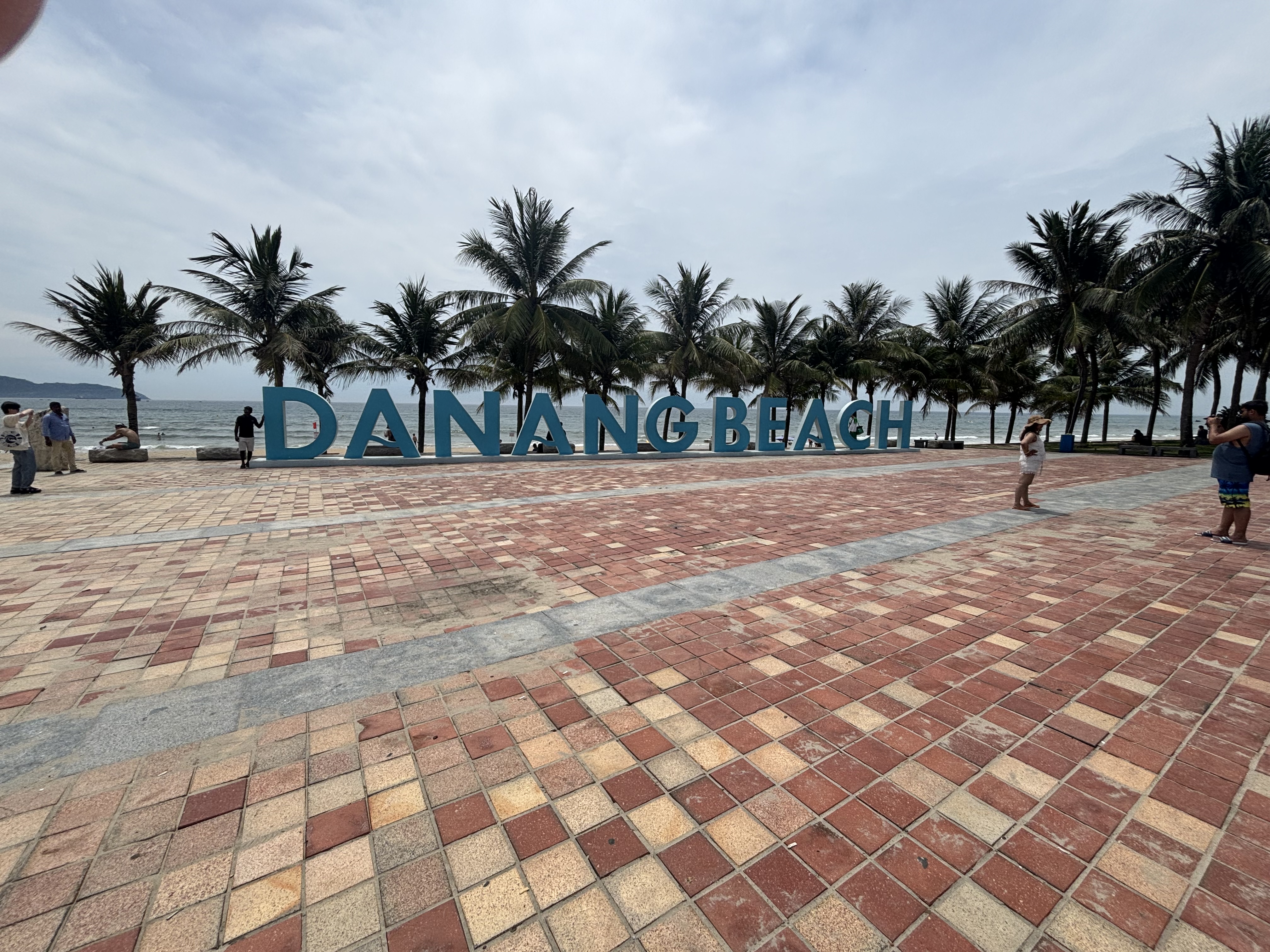
The Da Nang is in the lee of a mountainous headland which is now a national park, and with a beach that stretches for 20 miles along the coast to the estuary at Hoi An, it is very easy to see what it would have been like back in the day. However, the tourist dollar, and in particular, the Korean Won has had a bit of an impact on the place.
The locals describe it as Miami, because it now has 10 miles of high rise hotels stretching along the beach and reaching a few blocks inland. The place is bustling, with wide pavements along the beach to enable the hoards to walk to stretch their legs and plenty of things for them to do.
All is not lost, with a bit of hunting around I did find a little surf shack on the beach that felt as though time had passed it by, and we did get to have lunch and feel the surf vibe despite being in a concrete jungle.
We planned to meet youngest son, Sambo, here for the night before he headed to the Philippines on his world journey. We treated ourselves to a bit of 4* and a 20th floor balcony, and I have to admit the Hilton was worth the extra money.
As normal, some chaos ensued. When I booked the hotel, a quirk in the hotels.com app led to a double booking. I contacted the hotel and they could see it was booked within seconds and agreed to cancel the second room when I checked in, which they did.
Sambo had planned to stay in a hostel, unexpectedly turned up and asked to stay with us in our 4* hotel. I then had to go back to reception and ask if I could cancel the cancellation of the room that had just happened, they said no as I had to pay the walk up rate. So, I then ended up having to pay 25% more for the room I had just cancelled because I was booking it on the day – who would have kids, even when they are 21.
We had looked at the potential entertainment options from Da Nang, and most of them involved going to Hoi An or trekking into the mountains but we were quite happy to hang out on the beach and chill for one of our last days. We had read about the Bana Hills amusement park and decided this was not for us, we had done enough of these Vietnamese tourist attractions designed to attract the Koreans.
I wasn’t feeling too great as I was at the onset of a virus that ended up lasting a month, and quite frankly felt like poo and was happy to do not very much. Then Sambo turned up and all that changed.
There is a famous Instagram picture of a mystical hand holding up a bridge, it seems to be one of those that has to be done. Sambo explained it was only a 10 minute taxi ride away so we agreed we would all go and get our photo done.
We called the Grab cab and realised the 10 minute cab ride was actually an hour, and we were heading into the mountains we decided not to go to. We then discovered that the hand was an integral part of the Bana Hills theme park, another place we didn’t want to go to, and when we got to the ticket kiosk, I was £100 lighter by the time we bought the entry tickets, Mugged by Sambo yet again, bless him.
I have to admit that Bana Hills is a truly amazing place, even if I didn’t want to be there. The Vietnamese are in the process of building a vast amusement park ON TOP OF A MOUNTAIN. It is only when you get there that you start to grasp the scale of it.
There are FIVE cable cars reaching out from the park entry up to different peaks, each of which has a different perspective on the park. When we were there only 2 of the cable cars were actually working, but just travelling up in them is a marvel, it doesn’t really match Fansipan near Sapa for size, but it is heading that way.
First job was to head for the Instagram favourite, the Golden Hand bridge, and fight our way through the selfie hoards, so we could do selfies ourselves from every angle, and it was quite easy to miss the incredible views back towards Da Nang and the national park.
After getting over the sheer scale of the place, it is even more surprising to find that it seems to be dedicated to French culture. The French have many qualities and I love going there, but not many of them lend themselves to being a theme park. Once you have had the croissants, baguettes and glass of wine for lunch you start to quickly run out of steam and have to head for the amusement arcade for entertainment, which the Koreans seem very fond of.
It reminded me of some of the Disney Epcot park, where they emulate scenes from around the save the Americans from going there, I think the Vietnamese are trying to do the same thing.
There is an Alpine railroad, which is basically a little cart that runs along a rail, it had to be done but we were glad we only paid for one go, the queue to get on it took 50 times longer than the ride itself.
The owners of the park obviously got bored with the French theme and built a huge German bierkeller, which I have to admit was a lot more interesting, with all the beer being brewed onsite. Which was another reinforcement of this incredible engineering feat, as all the water has to be piped up from the valleys, absolutely incredible.
After an hour we were finding it hard to find reasons not to go back to the hotel, so we did, we then hit another problem, finding food. The seafood restaurants required us to select the individual seafood creature we wanted to eat, which made Sambo and Wooksie a bit queasy, and they were already very hungry, so we settled for seafood paella and whatever was in it, by this time I felt so rough I just went to bed and left them to it, then we had an huge tropical storm, which was a spectacular end to the day.
Next day it was it was goodbye to Sambo for 6 months, and time for us to head back to Hanoi for the flight home as our adventure draws to a close.