Tag: travel

  • Inca Trail Day 2:  Close encounters with trains and endless ancient step

    Inca Trail Day 2: Close encounters with trains and endless ancient step

    Day 2 of the Inca Trail trek officially started at the crack of dawn when the porters came to our tents with warm water to have a wash. Unfortunately, our day had started way earlier than that.

    This was our first night under canvass for many years, having had the luxury of an old VW camper for 20 years, the need to sleep on the floor was long passed. Consequently we paid the extra for the sleeping mattress, but during the night my body and the sleeping mattress parted company, or at least, I spent most of the night with limbs and torso only having the briefest of contact with the mattress, so the dawn chorus and the warm water was a welcome relief.

    Breakfast was all ready for us, with hot drinks, bread, toast and various local porridge type concoctions for us to stock up on. Day 2 was scheduled to be the big day, with a 1000m climb over Dead Woman’s pass, but we were heading off on our alternative route around the mountain.

    We set off along the valley, trekking through farmland and following the Urubamba River, which ultimately could take us to Machu Picchu Pueblo further along the Sacred Valley. The walking was nice and easy and Wooksie was recovering steadily at the lower altitude, and I was grateful we weren’t climbing a mountain, and I wasn’t the only one, Todd was really suffering with his knees.

    Time passed quickly as the adventurers got to know each other. I was inquisitive about the Mormon way of life and how their beliefs varied from mainstream Christianity, and the conversations meandered through numerous topics.

    We also had a lad from Sweden, I didn’t know anything about their social issues with drug related gang crime and I was even more intrigued to discover that there was still national service in Sweden, as you can tell, I enjoyed listening, talking and sharing views on anything that came up.

    Eventually we crossed a footbridge and found ourselves beside the train track again, we then realised that the alternative route was actually walking along the train track. It is probably fair to say that this approach would not have survived a UK Health and Safety risk assessment, but it was a lot of fun, but the walking was hard over the stones that the track was bedded on.

    There were plenty of tunnels and cuttings that involved sending a scout ahead to check it was safe, and then we would all run through the tunnel before any other trains came. Over time we all got used to our close encounters with the trains. They always blew their whistles as they must have known there were trekkers on their track, and it normally involved lots of waving to passengers.

    By early afternoon, we reached another river crossing and headed back across the bridge to pick up the trail. One of the discussions was around why would the Inca kings want to climb over a 4500m pass when they could walk along the river. It didn’t make any sense, so we concluded that the kings probably used this route along the river and named our trail the “Royal Route”, rather than the “Classic Route”. 

    The Inca Trail isn’t really the route used by the Incas, more a route that takes you through some of the Inca sites on the way to Machu Picchu.

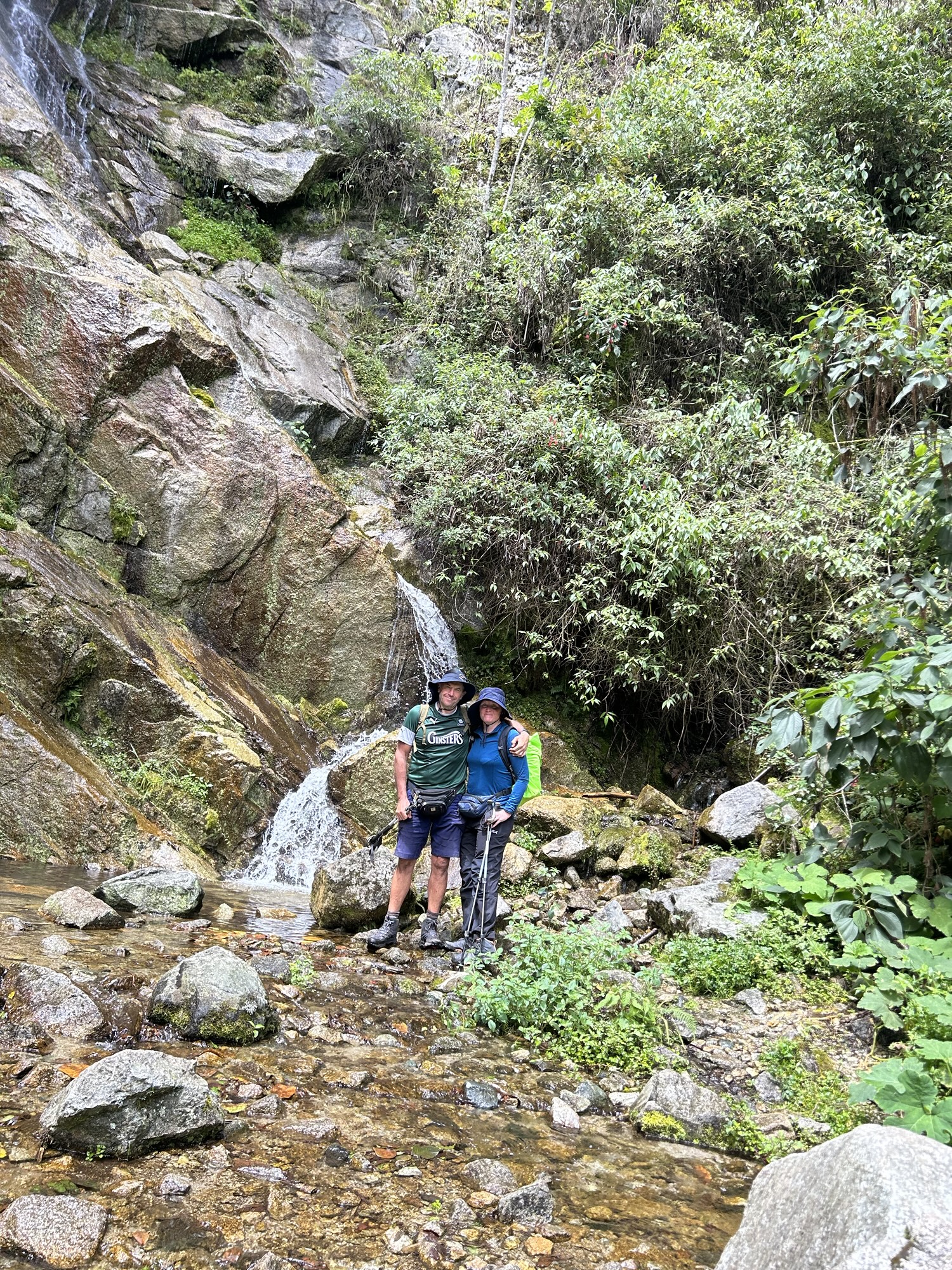
    Once across the river we picked up the normal trail again and started the climb. After an easy day along the valley, it was good to be in the forest again, climbing steadily past waterfalls and magnificent views, and we started to pick up the Inca constructions in the form of terraced hillsides.

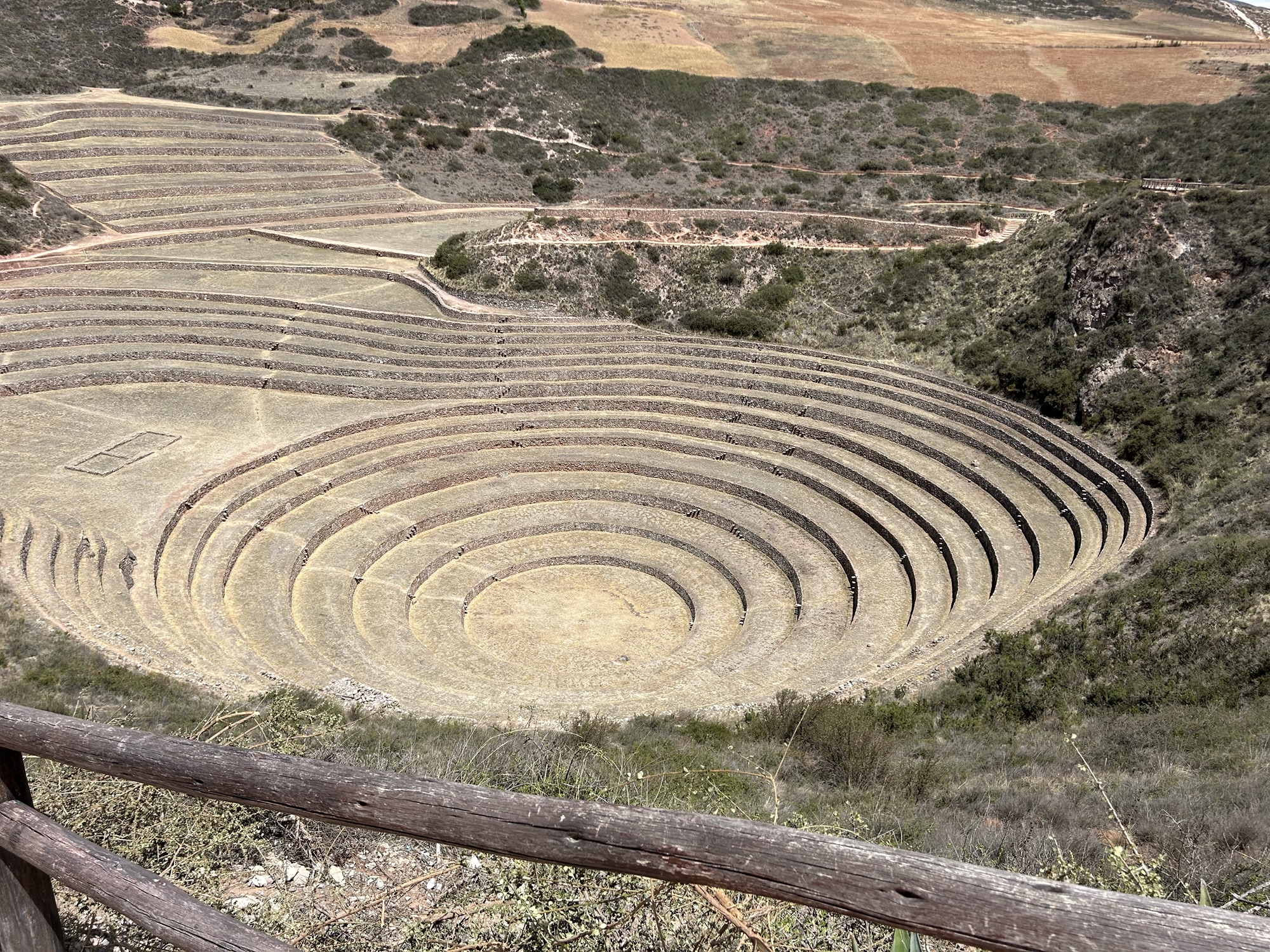
     We then realised how incredible the constructions were. Basically, these hillsides were very steep and covered in small loose rocks, and useless, The terracing of the hillsides enabled them to use the steps for farming and turn the whole area into a form of industrial farming complex. Among the constructions there were houses and temples that reflected their way of life.

    Late afternoon, we wandered into our second campsite. To find the porters had all been busy again, the tents had been built, the canteen tent was laid out ready for dinner and we had bowls of water sitting outside our tents for washing.

    Another smashing evening chatting with our companions, good food and pretty quickly the day light was gone and it was time to re-engage with my wandering mattress in the tent, and another night chasing it around the tent floor.
  • Inca Trail Day 1 – High drama at the Inca Trail head.

    Inca Trail Day 1 – High drama at the Inca Trail head.

    After the trauma of the altitude issues with Wooksie, we didn’t take the decision to push on with the Inca Trail trek lightly, but we knew this was probably our only chance to do it, but the chances of failure were quite high for Wooksie. We checked into the pre trek meeting in Cusco the night before, looking forward to meeting our fellow adventurers.

    We gathered in the meeting room to find we were travelling with 2 Canadians, 2 Swiss, a Dane and a group of 7 from one US family. During the introductions we discovered the Americans were from Utah and Mormons, brilliant, we were spending 3 days trekking with a bunch of bible punchers – could this get any worse.

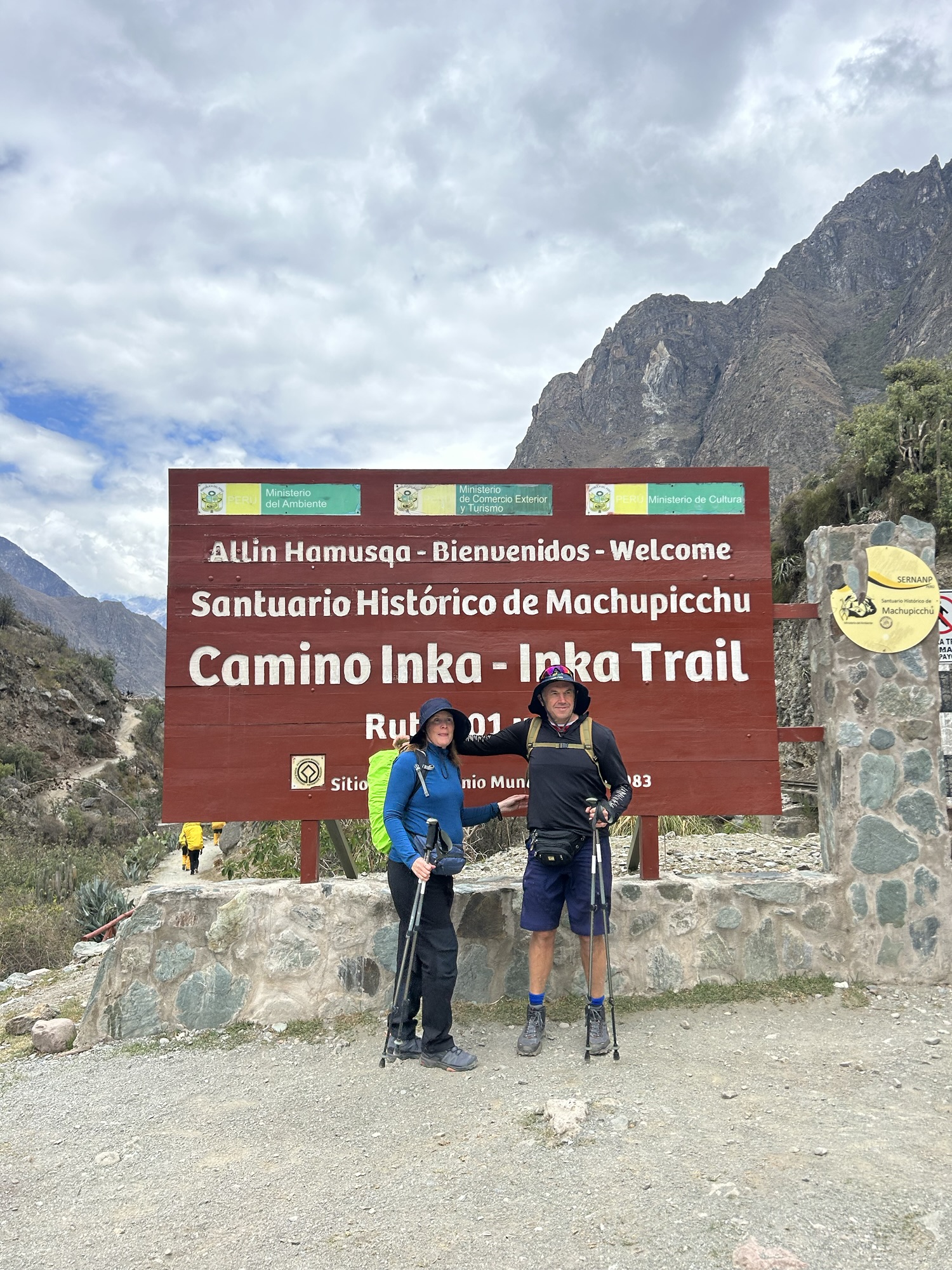
    We confirmed we were all in good health and ready to go, so next morning we were picked up at our hotel at 4am, and headed to Ollantaytambo trail head, the place where all those group photos of enthusiastic people are taken. However, we were one Canadian short, one of them had started to suffer from altitude sickness the night before and decided not to go.

    When we got there it quickly became apparent there was a problem. The guide went to the Wardens office to collect our passes and didn’t come back. We then noticed huddles of guides around the office in deep conversation.

    Our fellow adventurers formed huddles and started to speculate on what was wrong, had someone died on the trail, was there a guide strike, had Machu Pichu collapsed, were the porters on strike?

    Eventually our guide returned, gathered us together and did an athletic leap up on to a table. The trail was closed, apparently this had never happened before, but there had been a fire at high altitude on Dead Woman’s Pass and it was impassable.

    I put my head in my hands in total disbelief, for 22 years we had been looking forward to doing this trek, and the day we get here it is closed for the first time ever, I just couldn’t believe my luck.

    Later when discussing with our fellow trekkers, they all joked about what a desolate image I cut, but it really did feel like my cursed ability to wreak chaos and disasters had caught up with me again. To be honest, it was a bigger disaster for the Americans, who had booked a year in advance, but they presumably accepted it as an act of God!

    It then transpired that the guides and wardens were plotting an alternative option. There was an old trail which went around the mountain rather than over the top through Dead Woman’s Pass.

    Obviously, the trekking company didn’t want to lose the revenue and we all wanted to go, so a plan was hatched to take this alternative route that still delivered us to the Sun Gate to see day break over Machu Picchu on the 3rd morning. There was also a chance that the Pass may open later that day once the fire was under control.

    We set off along the route, which initially takes you alongside the train line that runs to Machu Picchu, we then crossed the river and followed the a relatively gentle trail along the side of the valley. I was amazed at the size of our operation, for every trekker there were at least 2 porters carrying the camping equipment, food and cooking utensils.

    In Nepal the treks used established wooden camps, so I was a bit surprised to see that the entire trek carried it’s own supplies and equipment over the mountains, these little Peruvians were strong!

    After a mile or so we started our first climb up into the hills and it became immediately apparent that we had another problem, Wooksie had been making reasonable progress but as soon as we hit a climb she slowed right down to a crawl, she is a woman of steel and never moans, but I could see in her face she was hurting.

    After a couple of painfully slow ascents, it became obvious that she was in no fit state to climb the Dead Woman’s Pass and that this fire, and the alternative route may have been the luckiest break ever.

    We started to see the failed trekkers making their way back down, individuals that looked like they had been broken by the experience, some walking, some on horseback and in once case, hardly conscious.

    As the day went on, I became more and more grateful that the Pass was closed, in fact my big concern was that they may declare the Pass open. I was watching the guides intently as there was a lot of radio communications going on. One trek was attempting the Pass to see if it was safe.

    We stopped for lunch in a large shed, the timing was perfect as we missed out on walking through torrential rains. Whilst having lunch the pioneer group that had tried the pass came in, it was impassable.

    The fire had burned up the vegetation which binds the rocks together on the mountain side, without the vegetation the rocks were lose and the forces of gravity were causing them to dislodge and cascading down the hillside, so the risk was not the fire but the threat of being hit by a falling rock.

    With this information I was even more grateful we were taking the old route, and after lunch we visited one of the Inca terraced hillsides to amaze ourselves at their engineering and landscape shaping skills, whilst Wooksie rested under a tree. She was getting stronger all the time but not strong enough to climb a mountain and now we knew that she would be able to make it on this lower route.

    Then we headed off for more walking and we made it to our first camp late in the afternoon, 10km covered today, but we knew it would be tougher the next day. One of the best thing about treks is the company of our fellow travellers, our  Mormon companions turned out be really great people.

    It was actually me that invoked the conversations about the Mormon lifestyle and values, unlike the common view of Americans that they are insular, uneducated and don’t travel, these guys travelled a lot. The grown up children had all been missionaries in Central America or Africa, were really well educated, and seemed to be able to talk about anything, so were great companions.

    At the end of the  trek I was left reflecting how our drift away  from religion  meant we had lost many  good  values.

    That night, the porters set the tents up, set up the canteen and cooked an amazing meal then challenged the walkers to a football match, which we declined !

    We had a great time chatting with the others over dinner. Some of the younger trekkers  were very disappointed about missing out on the climb, but Todd, the father of the  Mormon family was struggling with a bad knee and Wooksie were relieved, I’m not sure either of them would have made it.

  • The incredible Sacred Valley of the Incas

    The incredible Sacred Valley of the Incas

    Next up on our adventure was a day tour of the Sacred Valley of the Incas.  In many ways this was the most amazing tour of the holiday as we saw many of the Inca sites, everyone thinks about Machu Picchu but the Incas were very busy around this region and this tour picked up many of their structures. I’d say I learned more on this trip than the Inca Trail, that is how good it was.

    One of the problems with the Inca history and previous civilisations, is that they couldn’t write. Unlike the West where we have written or documented history from the Egyptians and other early civilisations, nothing like that exists for Peru and written history is largely attributable to the Spanish conquistadors, and only a limited number of academics who wanted to preserve their legacy.  

    There were a couple of highlights of this tour, the first was the amazing, terraced valley near Pisac. As a geographic spectacle it is stunning, as you stand at the top of the valley it is difficult to believe ancient people could have turned a valley into this terrace. Even more amazing was the scientists, belief that the terraces were used as a biological observatory to test the ability of plants to survive at difficult altitudes.

    The Incas were basically engineers, they build incredible walls with amazing scientific accuracy in the angle of the walls to ensure their stability.  The thing we learned over our time in this valley was that the terracing of the valley was the only way it could be inhabited.

    The walls of the valleys are so steep with unstable rocks that the only way to flourish in the valley was to create stability and that is why  the Incas built all the terraces.

    We then moved on to an amazing terrace of salt pools, this too dated back to the Inca civilisation, they had spotted that the underground river was carrying salt and built these pools to trap them. This is still a commercially viable site and one of the big products is, surprisingly, chocolate.

    Then we headed to Ollantaytambo this little town was the place that the train to Macchu Pichu leaves from, and also the trail head for the Inca Trail trek.

    This little town had an amazing, terraced structure of it’s own, called the Temple of the Sun and on the other side of the valley there were tombs built into the mountain rock face that were hundreds of feet above the valley floor. It was very difficult to imagine how people climbed up the rock face along narrow paths to build these structures way up on the rock face.

    We then set off to climb the terraced temple, which was steep but nothing compared to what was coming on the Inca Trail. it was then that I noticed that Wooksie was struggling, she had been recovering nicely and was getting back to herself at the lower altitude, but clearly when put under strain it became very difficult and we were still at a much higher altitude than normal

    So a long drive back to Cusco, a very well organised tour and if you only have time for one tour I would say this is the one, you don’t see Macchu  Pichu but you do really get an impression about the amazing the Inca nation before the Spanish eradicated it in their search for gold, fortunately, some of it was documented. 

    With Wooksie still struggling we had a very difficult decision ahead of us. The Inca Trail had been booked 6 weeks before, postponement wasn’t an option so our decision was “go” or “no go”. We had another quiet day in Cusco mooching around the museum and taking it easy to help Wooksie recover.

    A tough decision in our world always comes down to the same question, “What’s the worst thing that could happen”, and that is where we got to with the decision on the trek. Wooksie wasn’t really up to it, but we had the option of completely cancelling or giving it a go. We concluded that we were better off giving it a go and if it didn’t work out, we would just have to pull out of the trek and the costs of being extracted.

    So we committed to going and turned up the pre trek meet that evening, but we weren’t feeling particularly confident – onwards and upwards, although the name of the high altitude pass, Dead Woman’s Pass, wasn’t exactly encouraging.

  • Goodbye to Puno and on to Cusco for lower altitude

    Goodbye to Puno and on to Cusco for lower altitude

    The trip from Puno to Cusco was largely without incident.  Wooksie was recovering from her hospitalisation, probably the best way to describe her was fragile, having a 10 hour bus ride with her feet up looking at the landscape as the altitude dropped was a good way of spending the day.


    We stopped off to have a look at a museum and some ancient sites. It started to become clear that the history of the indigenous people was pretty vague and did not seem to develop into anything significant before the Inca nation emerged by conquering what existed before.

    We arrived at our hotel in central Cusco with Wooksie feeling better and able to go for a gentle walk around the town. My alarm bells for the Inca Trail were ringing loud as it was only 72 hours before we were due to head off on the Inca Trail so the recovery needed to be fast.

    It is worth noting that if you do the bus trip from Puno to Cusco, the bus  drops you outside of the main city, so you have to get a taxi into the centre, this is a pain if you haven’t organised one when you book the bus.

    We found our way to the hotel and I left Wooksie in our room to recover and went of a scouting mission to get a bit of orientation around Puno.

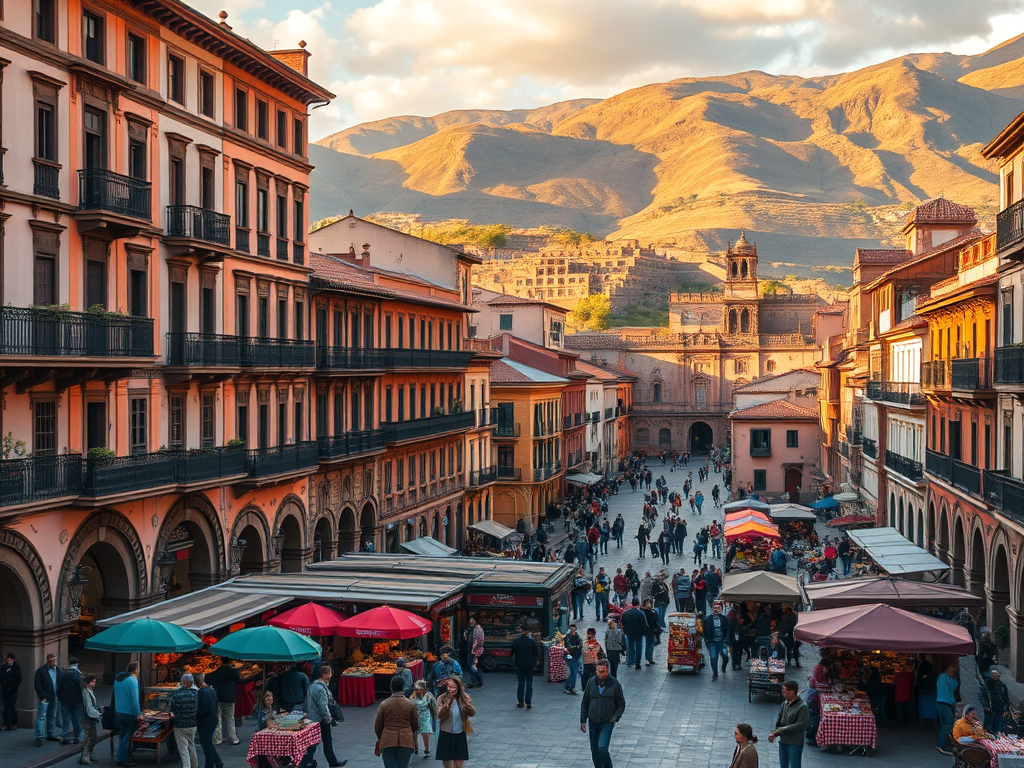
    It is basically a beautiful town square in classic Spanish Central American style. The Incas has plenty of gold so the Spanish invested time in beautiful buildings.

    The town spreads out in all directions, including up a cliff behind the main square, there are lots of boutique hotels up on this hill as they give great views down through the valleys.

    As with everywhere in Peru, there is lots of traffic and every trip is fraught with danger when crossing the roads. Cusco is busy but the town square is where most tourists head for and to be fair, it can be quite peaceful when the traffic calms down.

    Checking out online I discovered they had two Irish Bars, both of which claimed to be the highest Irish Bar in the world. So I headed over to investigate and found they were only about 50m apart. I’m guessing the lower of the two was first and was pretty annoyed when the other one turned up.

    They both provided great sources of safe food for Wooksie and part of her recovery, live music and lots of fellow adventurers from all walks of life and all ages to chat.

    The unexpected treat that I discovered was a Starbucks on the other corner of the square, this place was turning into a little bit of heaven for us as we got a bit of western culture back into us before heading back into the wilds.

    Our investigations of Cusco were largely based in the streets around the main square. The ancient Inca museum was probably the highlight, as that was where all the artifacts from the archaeology were displayed.

    it further reinforced our view that pre Inca, little was known about the civilisations that existed before, and most of the items on display were rudimentary tools which we would associate with the Stone Age in the UK.

    The side streets were attractive, colourful, full of hawkers trying to sell us stuff and great place for Wooksie to continue to acclimate herself to the altitude.

    Then it was time to prepare for the early morning departure to the Sacred Valley of the Incas and more altitude adjustment time for Wooksie..

  • Puno, Lake Titicaca and Altitude Sickness

    Puno, Lake Titicaca and Altitude Sickness

    Our altitude strategy was to prepare for the Inca Trail trek was to spend 4 days at high altitude on Lake Titicaca, at 3800m to adjust, and then travel down to Cusco at 2500m and we should have been ready to go.

    Unfortunately Wooksie had picked up a tummy bug on the way back from Nazca so wasn’t on top form. We flew from Lima to Juliaco, all the guidebooks said avoid Juliaco unless you want to be mugged, which we didn’t so we got a taxi direct to Puno.

    The lack of oxygen at high altitude hits you really fast, when I got out at Juliaco it was like having a weight on my chest. During the taxi ride Wooksie said she was feeling really sleepy, I felt drowsy as well as my body adjusted to the lack of oxygen. I was particularly concerned because I suffer from asthma, so expected a tricky transition.

    We booked a lovely hotel on the banks of Lake Titicaca, on the basis we could sit around, enjoy the view, not do much and adapt. We pottered around for a bit and Wooksie decided she wanted a nap, this was exactly what every guide to high altitude said would happen, so I wasn’t particularly concerned and went for a walk to push my lungs and push my transition.

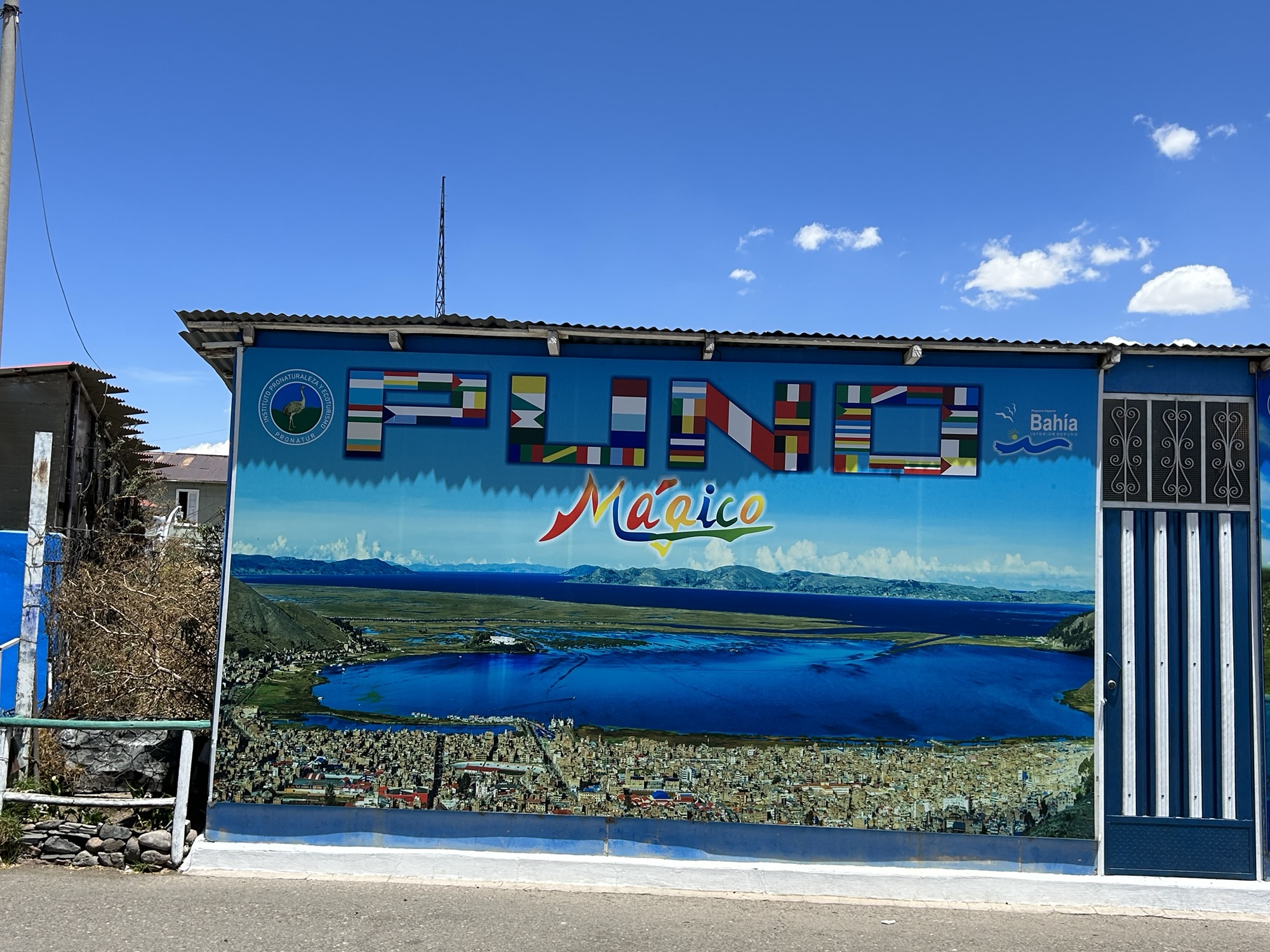
    That night we had dinner in the hotel and an early night, next day we went for a walk around Puno, which I have to say isn’t a very exciting place.

    Unexciting unless you are in the fruit market when the train comes through, at that point all the stalls are dragged off the tracks until it has gone.

    We strolled around the port, bought some medicine for the stomach bug, but Wooksie was tired again and went back to bed in the afternoon, while I got in a 10km walk without much trouble so I was doing fine.

    We then did a 2 day tour of the islands on Lake Titicaca and I became increasingly concerned about Wooksie as she was deteriorating rather than improving. She made the climb from the dock to the square, a climb of about 100m un altitude over maybe a kilometre, so steep but nothing terrible.

    It was obvious something was wrong, she gritted her teeth and climbed up, literally 1 step at a time. After a rest at the top, she perked up and made it back to the boat, but within minutes she was fast asleep again for the trip back.

    The walk from the cab to the hotel was painful, she was hardly moving and it suddenly hit me that we were supposed to be doing the Inca Trek in 4 days’ time. Surely this couldn’t just be just altitude sickness, so I got the hotel to call out the doctor to check her out.

    In simple terms, we normally have an oxygen level of about 95 in our blood. During Covid, if your oxygen level dropped below 80 you were admitted to hospital, and the human brain shuts down when oxygen level drops below 70.

    Wooksie had an oxygen rating of 72, she was on the verge of being critically ill, the sleeping was her body shutting down. Her body had been busy fighting the stomach bug she picked up in Nazca, it couldn’t cope with the shock of the altitude and her body was losing the fight.

    The doctor rushed her to the emergency clinic, wired her up to drip,  oxygen, antibiotics, hydration and anything else they could think of to help her survive and get her back up to speed. The solution was quite simple, we had to get down to lower altitude to help her recover.

    So, a mad panic to put our transport plans back 24 hours so she could have time in the clinic on oxygen and then it was on to a bus downhill to Cusco.

    I was fully expecting her to come out of hospital the next day full of beans and jumping around but it was nothing like that, her oxygen count was still only about 84 after 24 hours, so she still had no energy – this wasn’t the fix we were hoping for but it was the best we could do, and Wooksie took it easy as the bus wasn’t until the next morning.

    Meanwhile, not to waste and opportunity, I went out in search of a pizza to bring back to the hotel and found myself in this amazing little bar, luckily it did takeaway pizzas too. I took the opportunity to test their beer while I was waiting for the pizza. As the bar was empty, I couldn’t resist the temptation to fiddle with the music playlist and before i knew it I was on my second beer whilst choosing the music and listening to Blue Monday. If only Wooksie could enjoy this too, and they did a great pizza.

    I had been carrying a couple of spare Argyle scarves to donate to a bar somewhere, that was hosting the travelling football fan tradition of dropping your scarf off in a foreign country. I wasn’t going to get much further from Plymouth than Puno, so I donated my first scarf to their very small collection and I hopefully it is still there, the Green Army now owns Puno.