

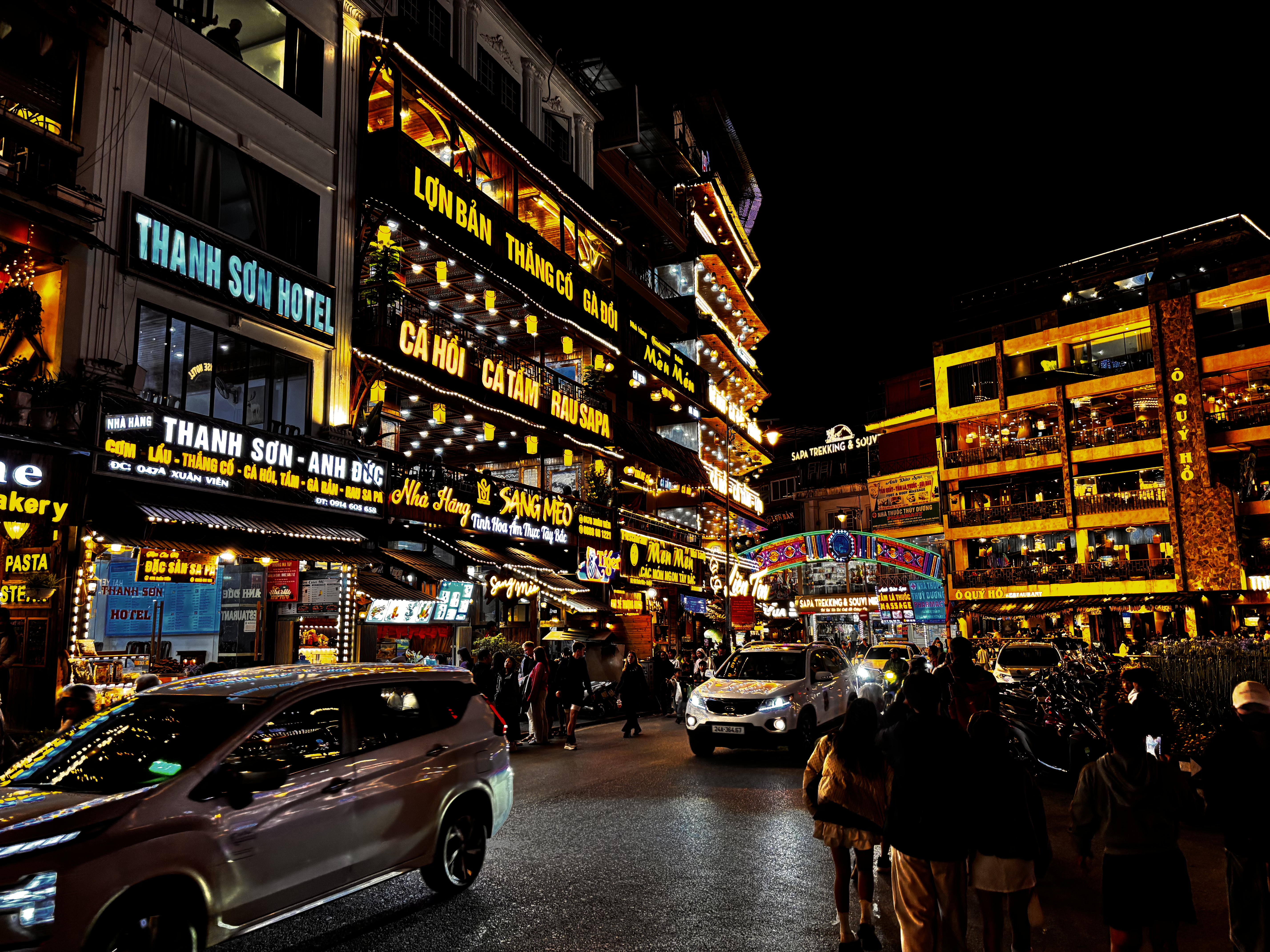
We are just back from our adventure in Vietnam, a truly wonderful experience and one that I will remember for the rest of my life. There are millions of words out there about all the things you can do on a trip to the country, and I will be adding to them over the coming weeks as I pull together the blogs about the places we visited.
Vietnam is a country in the midst of a modernisation revolution, on the one hand it has a become a massive manufacturing sector that most of us know for sports shoe brands, it even has its own car industry. Whilst on the other hand when you venture out into the countryside the rural communities are subsistence farmers, living off their land and selling goods at local markets. So not only it is exciting and vibrant, but it is also a place of contradictions, between the claustrophobia of Hanoi to the peace and tranquility of the mountains.
I thought I would start with 3 things that I did really expect when we were doing our planning, and hopefully these will really help you with your plans.
Vietnamese money

Their currency is an absolute nightmare, you can have a wallet full of paper money and not have enough to pay for a coffee, the notes come in lots of different denominations with the biggest being 500,000 dongs, and the smallest is on 500 dongs. Even worse, they all look quite similar, so it is possible to get into a horrible mess.
What makes it a little more difficult is that for all modernisation in Vietnam, they haven’t really moved towards credit cards, which are rarely accepted, so you don’t have the simple alternative to just tap and go. It is very much a cash economy and they use a payment system between themselves that involves a QR code and WhatsApp, which looked fraught with danger!
So, before you go, try to get some basic understanding of the notes and how they work, as everyone, young and old, are confused by the currency.

Tourism industry
You are probably planning to go because you have seen beautiful images of the limestone peaks around the north, or the twinkling lanterns in Hoi An. After I had been there a months it dawned me that this is a massive part of their national strategy and there has been enormous investment over the last 20 years to move the country from a back packers destination to a perfect destination for adventurers of every age, with massive influx of visitors from Japan and Korea in particular.
It is not a coincidence that the buses on the major tourist routes are modern sleeper buses or VIP coaches that are like travelling business class on a flight, these haven’t arrived by coincident. Hotels are all high quality, including the hostels, and as you move around the main centres you find endless trips and attractions on Tripadvisor. After a while the penny drops that these are all quite recent developments, whether it’s the Fansipan cable car in Sapa or Bana Hills near Da Nang, most things have been built in the last 15 years.
Where the Vietnamese have been super clever has been how the exploit their stunning landscape by creating things that make for brilliant Instagram or Facebook holiday photos, whether it is Train Street in Hanoi or you have to climb a mountain in Nim Binh, there is always the Instagram shot ready made.

Vietnamese food
I love Asian food and was really looking forward to this aspect of the trip, but I have to be honest and say that a lot of their food is quite bland. Breakfast might include a croissant, but it wouldn’t taste of anything because it didn’t have the sweet coating, similarly with other meals, we found ourselves reaching for the Soya Sauce to give it some kick as they sauces didn’t have much flavour. It is a far cry from the food you find in Thailand or even your local Chinese takeaway.
I think it is because they don’t use sugar and salt in the way Westerners use it.
Finally, you can’t but love the Vietnamese people. They are so much fun to be around, they are primarily a kind and polite race. To be honest, I’m not sure race is the right word because there are so many different ethnic groupings and something like 50 different local languages still in use. Around Sapa alone there are at least 5 different languages spoken in the villages around that region, as well as Vietnamese, and increasingly, English.
They are fiercely proud of their heritage and happily talk about beating three super powers, the Americans in the Vietnam war, before that they fought off the Chinese and even Genghis Khan couldn’t defeat the Vietnamese warlords, so they might be fun, but don’t truck with them.
Hope that provides you with a few hints to plan your holiday.
Leave a Reply