

There are two main reasons for going to Cappadocia. It is the spectacular balloon flight images that attract most people, but my interest in Turkey had been triggered by a documentary on the underground caves that were built by ancient tribes to hide from aggressors, dating back to Romans chasing early Christians and then Genghis Khan chasing them with the marauding Mongols.
Getting to Cappadocia wasn’t as easy as it seemed. One of the characteristics of air travel in Turkey is that airports seem to be a long way from the places you want to be. Goreme is the hub of activity for the balloons and caves. It is served by two airports: Nevsehir, which is about 50 minutes away, and Kayseri, which is nearer 90 minutes away. There are buses that are cheap enough, or you can splash out on a cab.
The region has a peculiar landscape that has been formed from volcanic rock. This rock erodes relatively easily, but it is also relatively easy to dig into. Consequently, humans have been carving out caves in the rocks and building their dwellings for up to 10,000 years.
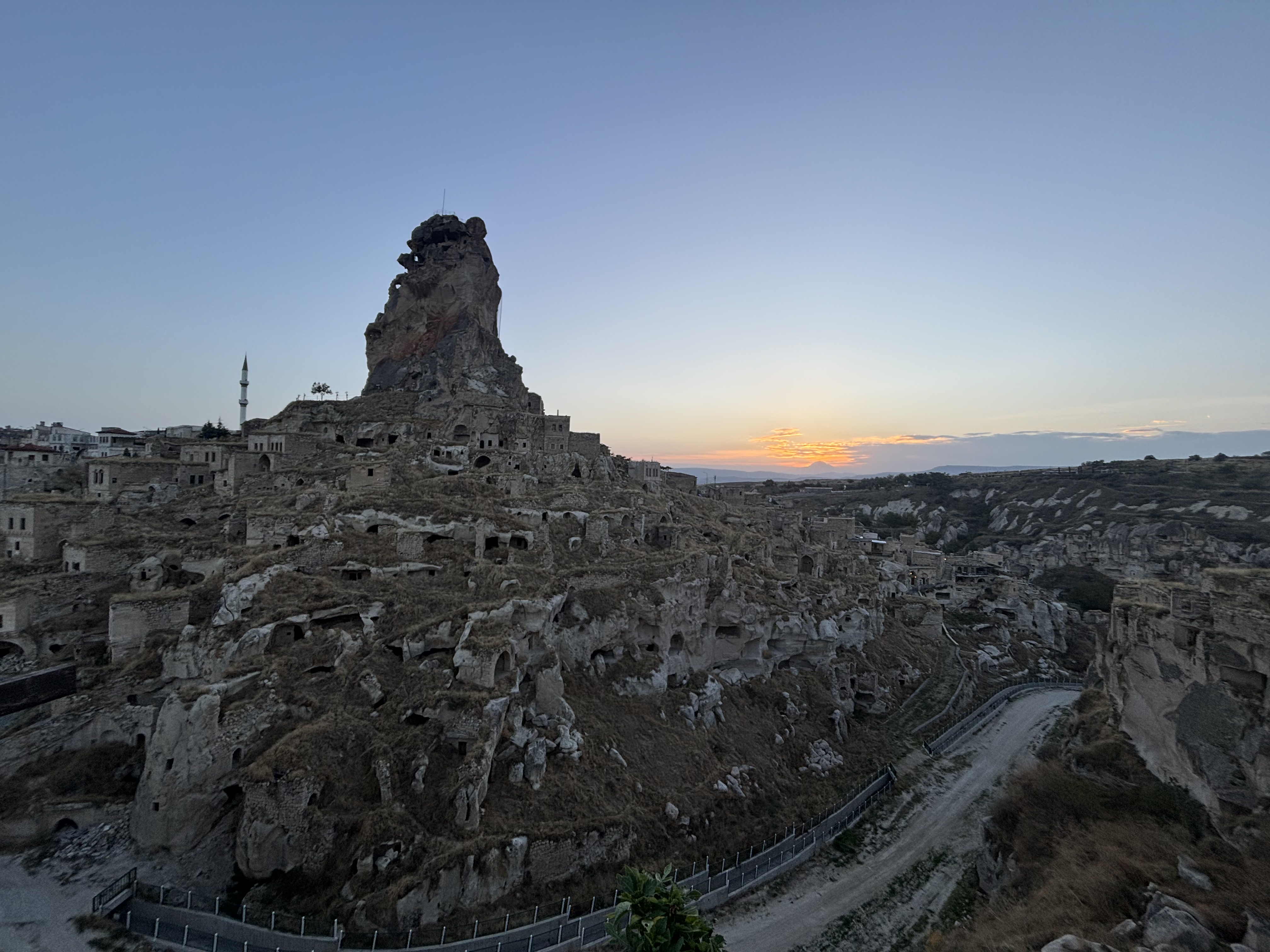
I really wanted to stay in one of the cave hotels and experience the primeval survival instinct, which was helped by having aircon and a hot tub in the room. We stayed in Portal Cappadocia Hotel, which directly overlooks Ortahisar Castle. This was fantastic and gave us a great view of the buildings carved into the cliff.
It is also noticeable how many of the caves and buildings are abandoned. The continual erosion doesn’t appear to give the dwellings a long life expectancy.
Goreme is at the heart of the underground cities and is where all the trips originate. There are two main trips: the Red Route, which is more focused on museums, and the Green Route, which is longer and covers the southern region of Cappadocia, including Derinkuyu Underground City, the Ihlara Valley and Selime Monastery.
The first stop ticked off the Derinkuyu Underground City. It went down seven floors and was an incredible experience. I was expecting the underground city to be a cave system that was expanded by humans, but it turned out the whole thing was dug manually. It was an absolute labyrinth of underground tunnels that dropped seven levels, not a place for anyone who is claustrophobic.
It is estimated that 20,000 people could exist in the tunnel system, and there are more underground cities littered around the area. It is believed that they were once joined together by tunnels as an underground fortress.
Within the structure there were giant stone wheels that could be rolled into place to block off different tunnels. It was all very Indiana Jones. In the middle layers the tunnels were smaller and lower to make attacks more difficult. They also make it more difficult for tourists, and I’ve still got the scars on the top of my head from scrapes.
Historians have theories about the tunnel origins. Most suggest they appear to have been used by Christians as protection from the Romans and latterly the Mongols. It was an absolutely intriguing place.
Selime Monastery
Next up was Selime Monastery. This was part of the historic Silk Route between Europe and Asia and was carved into the rock. It is still an incredible structure, with an entire church carved into the rock, rooms for travellers and defensive structures to protect merchants and their wagon trains.
So, my curiosity about the underground civilisation and cave cities was satisfied. Now it was fingers crossed that the weather would hold for the balloon ride.


Leave a Reply