

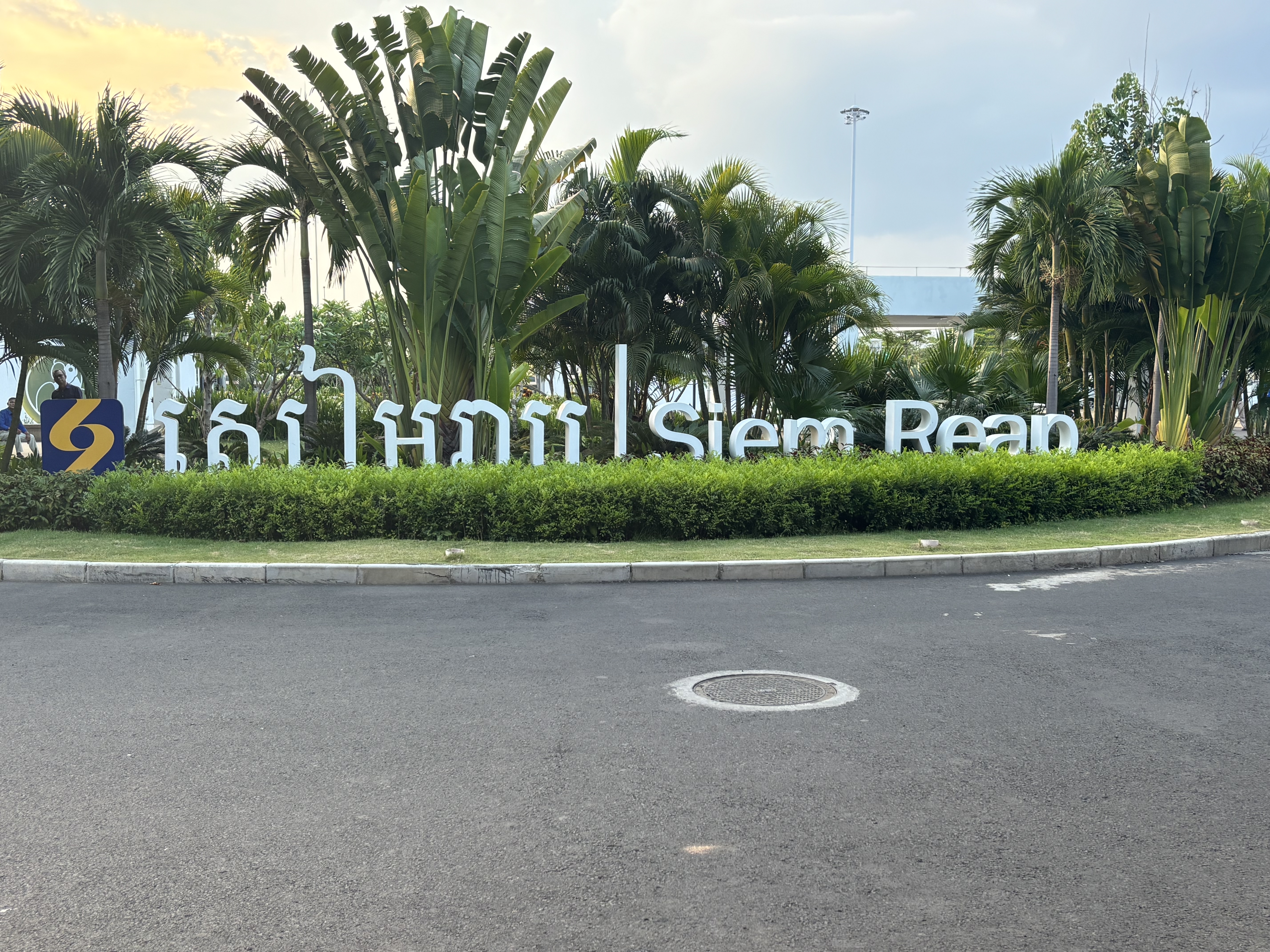
It was time to leave Vietnam and head for Seip Riem in Cambodia. People normally go to Seip Riem for one reason, to see the Anker Wat temple, and its little cousins spread around the region.

We were expecting something quite similar to Vietnam, being as they are neighbours and share quite a lot of joint history, so it came as a bit of a surprise the level of difference, although if we had flown into Phnom Phen, we would have probably found it a lot more similarities than we did flying into Seip Reim.
First surprise was that we needed an entry visa, which we hadn’t planned for, and an even bigger surprise was that I was down to my last empty passport page, Cambodia needed at least 2 free pages, so this raised a risk level.
The online visa process was straightforward, and despite some nervousness when we got to immigration, it all worked fine and we walked straight through. Cambodia don’t stamp passports; they have full e-borders at airports that Europe and the UK could learn from.
The airport is a long way from the town, must have been about 70km which seemed a very long way across an empty landscape, but the roads were good and the taxi driver was chatty so time passed quickly.
Next surprise was how calm and friendly the people are, in fact Seip Riem is a very calm and tranquil place compared to where we went in Vietnam. The streets are wide, there are parks and a tranquil river running through the city, but the city is very hot.
The calmness may be down to their primary religion being Buddhist, and when you walk around, you are surrounded by temples. The religious history is very interesting as they are a mix of Buddhist and Hindu, with the national religion swapping between the two in history.
Siem Reap possesses French-colonial and Chinese-style architecture in the Old French Quarter and around the Old Market. The city is a major hub for tourism in Cambodia due to its close proximity to the ancient temples of Angkor constructed during the Khmer Empire. In and around the city there are museums, traditional Apsara dance performances, a Cambodian cultural village, souvenir and handicraft shops, silk farms, rice paddies in the countryside, fishing villages and a bird sanctuary near Tonlé Sap, and a cosmopolitan drinking and dining scene.
The modern history of Cambodia bubbles under the surface just like in Vietnam. In Vietnam people are only too happy to talk about their victory over the US in the 70s, and they have a population of 100 million. Cambodia is very different, the population is only !5 million, partly due to their participation in the war against the US, but also from the genocide that the country suffered under the leadership of Polpot and the Khmer Rouge, covered by the film the Killing Fields.
Money is a challenge though it is easier than in Vietnam as the local seem to prefer to use US dollars than their own money, but you do end up with Cambodian Riels, but mostly in change. In fact, at the airport everything is in US dollars.
Every local we spoke to had lost close relatives in the slaughter, mostly fathers, and the pain is still written on their faces when they talk, it is very sad and an area that we did not delve into too deeply. We chose not to visit the various killing field sites, as it felt far too sad and we could feel the pain from the people we met.
Once we had settled, we headed for the internationally famous Pub Street, and it didn’t disappoint because it was busy and fun. The Cambodians are very clever people, basically they the have built a load of bars in a tight network of streets that are brightly lit, nicely laid out, easy to find, and concentrates all the rowdy Westerners in one area, so they are nice and easy to manage. The bars stay open late, play every type of music and offer fun for everyone.

5 minutes’ walk in any direction and you quickly leave the party behind and back into tranquil streets. The Cambodians have also concentrated a lot of their more up market hotels around the palace area 1km away, so a nice and easy walk.
So now we are here we will head for the main event at Anker Wat, but first we are going to have a look through the back streets and their Hidden Treasures
Leave a Reply